







What's Happening?
The Atlantic States Marine Fisheries Commission has approved new regulations that will reduce the amount of menhaden that can be caught in the Chesapeake Bay by approximately one-third. The commission voted to lower the Bay's catch limit from 51,000 metric
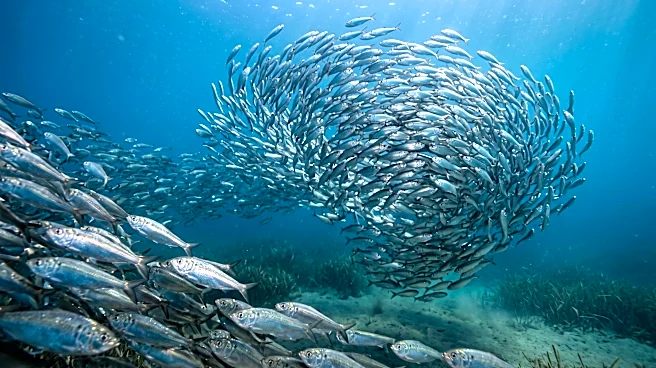
tons to 33,847 metric tons, a reduction that will be implemented over the next two years. Menhaden are small fish crucial to the Chesapeake Bay ecosystem, serving as a primary food source for various wildlife, including striped bass and osprey. In addition to the Bay-specific reduction, the commission also approved cuts to the coastwide catch limit, decreasing it by 9% in 2027 and an additional 9% in 2028. The Chesapeake Bay Foundation, while welcoming the Bay's reduction, expressed criticism that the coastwide limits were not more stringent, having advocated for a 50% reduction in the Bay's catch limit due to concerns over declining menhaden populations.
Why It's Important?
This reduction in the menhaden fishing limit is significant for the ecological health of the Chesapeake Bay and the broader Atlantic coast. Menhaden are a foundational species, and their abundance directly impacts the populations of larger predatory fish and birds. A decline in menhaden can lead to a ripple effect throughout the food web, potentially harming commercially important species like striped bass, which rely on menhaden for sustenance. The decision reflects a growing concern among environmental groups and regulatory bodies about sustainable fishing practices and the long-term viability of marine ecosystems. While the Chesapeake Bay Foundation views this as a 'hard-earned win,' their call for a more substantial coastwide reduction highlights ongoing tensions between conservation efforts and the economic interests of the fishing industry. The new regulations aim to balance these interests by ensuring the continued health of the menhaden population and, by extension, the entire Bay ecosystem.
What's Next?
The new Bay limit for menhaden will be tied to the coastwide catch limit, meaning that future adjustments to the overall harvest could influence the amount of menhaden permitted to be caught in the Chesapeake Bay. This linkage suggests that the management of menhaden populations will continue to be a dynamic process, subject to ongoing scientific assessment and regulatory review. Stakeholders, including environmental organizations like the Chesapeake Bay Foundation and commercial fishing interests, will likely continue to monitor menhaden populations and advocate for their respective positions regarding future catch limits. The effectiveness of these new regulations in restoring menhaden populations and supporting the broader ecosystem will be closely watched, potentially leading to further adjustments in fishing policies in the coming years.
Beyond the Headlines
The debate over menhaden fishing limits extends beyond simple conservation, touching upon the complex interplay of ecological science, economic pressures, and regulatory governance. The Atlantic States Marine Fisheries Commission's decision underscores the challenge of managing shared natural resources that cross state lines and involve diverse stakeholders. The criticism from the Chesapeake Bay Foundation, despite the reduction, highlights a broader philosophical divide between those prioritizing ecological restoration and those emphasizing economic stability for fishing communities. This ongoing tension is a microcosm of larger environmental policy debates, where scientific recommendations must be balanced against socio-economic realities. The long-term health of the Chesapeake Bay, a vital national estuary, will serve as a critical indicator of the success of such adaptive management strategies.