


What's Happening?
Two controversial satellite proposals have been submitted to the Federal Communications Commission (FCC), sparking public concern over their potential impact on the environment and astronomy. The first proposal by Reflect Orbital involves deploying satellites
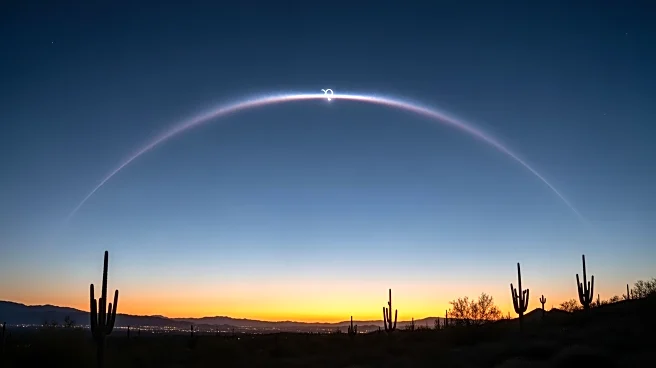
equipped with mirrors to reflect sunlight back to Earth at night, marketed as 'sunlight on demand.' This initiative aims to extend daylight for solar farms and illuminate urban areas. Critics argue that this could disrupt the natural day/night cycle, affecting both diurnal and nocturnal wildlife, as well as human sleep patterns. The second proposal, from SpaceX, seeks permission to launch up to one million satellites to expand its artificial intelligence infrastructure. This would significantly increase the number of active satellites, raising concerns about space debris and the risk of collisions. The public is urged to submit comments to the FCC before the comment period closes.
Why It's Important?
The proposals have significant implications for environmental and scientific communities. Reflect Orbital's plan could alter ecosystems by disrupting the natural behaviors of animals and plants that rely on the day/night cycle. Additionally, the artificial extension of daylight could exacerbate urban heat retention, impacting energy consumption and climate. SpaceX's proposal to launch a massive number of satellites could lead to increased space debris, heightening the risk of collisions and potentially triggering a cascade effect known as Kessler Syndrome. This would jeopardize space operations and the functionality of satellites used for communication, weather forecasting, and navigation. Furthermore, the proliferation of satellites could hinder ground-based astronomy by obstructing the view of the night sky.
What's Next?
The FCC will review public comments and assess the potential environmental and operational impacts of these proposals. Stakeholders, including environmental groups, astronomers, and the aerospace industry, are likely to engage in discussions to address the concerns raised. The outcome of the FCC's decision could set a precedent for future satellite deployments and influence regulatory frameworks governing space activities. If the proposals are approved, there may be calls for stricter regulations on satellite launches and operations to mitigate environmental and safety risks.
Beyond the Headlines
The debate over these satellite proposals highlights broader issues related to the commercialization of space and its environmental impact. As private companies increasingly venture into space, there is a growing need for international cooperation and regulation to ensure sustainable practices. The potential for light pollution and space debris raises ethical questions about humanity's responsibility to preserve the natural environment and protect scientific endeavors. The situation underscores the importance of balancing technological advancement with ecological preservation.