





What's Happening?
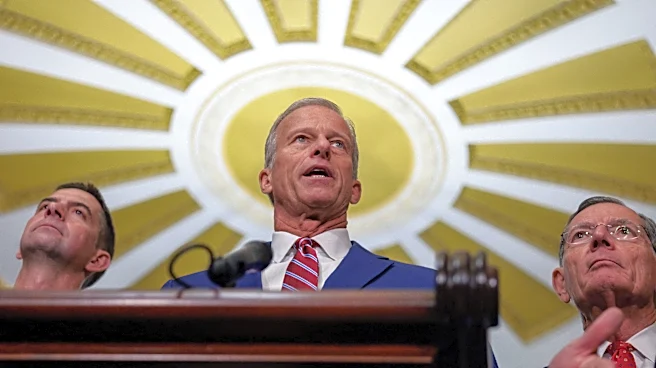
A bipartisan group of Texas congressional members, led by U.S. Congressman Brian Babin (TX-36), Chairman of the House Committee on Science, Space, and Technology, has sent a letter to the Presidential Commission on the United States Space Academy. The
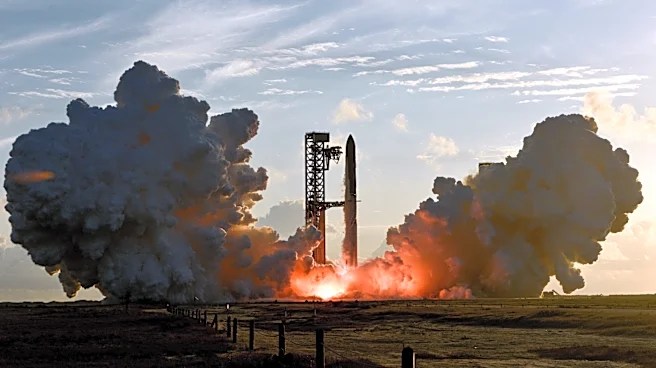
letter endorses Texas as the ideal location for the proposed U.S. Space Academy. Signatories include Senators Ted Cruz (R-TX) and John Cornyn (R-TX), and numerous Representatives such as Michael Cloud (TX-27), Randy Weber (TX-14), August Pfluger (TX-11), and Beth Van Duyne (TX-24). The delegation emphasizes Texas's long-standing history in space exploration, citing NASA's Johnson Space Center, Mission Control, and a thriving aerospace industry as key reasons for their recommendation. They argue that Texas possesses the necessary experience, infrastructure, talent, and innovation to train the next generation of American space leaders and advance the nation's space defense capabilities.
Why It's Important?
The establishment of the U.S. Space Academy in Texas would significantly bolster the state's position as a national leader in aerospace and technology. This initiative could lead to substantial economic benefits for Texas, including job creation, increased investment in research and development, and the further growth of its commercial space sector. For the U.S., housing the academy in a state with a rich space legacy and existing infrastructure could accelerate the training of future astronauts, engineers, and scientists, thereby strengthening America's leadership in space exploration and national security. It underscores a strategic effort to maintain and advance the nation's competitive edge in the global space race, ensuring a continuous pipeline of skilled professionals for both government and private space endeavors. The move would also solidify the connection between the academy and the operational realities of the U.S. space program, leveraging existing expertise and facilities.
What's Next?
The Presidential Commission on the United States Space Academy will now consider Texas's proposal, along with any others it receives. The decision will likely involve evaluating various factors, including existing infrastructure, educational partnerships, and the potential for synergy with current space industry operations. Should Texas be selected, the next steps would involve detailed planning for the academy's establishment, including site selection, curriculum development, and securing funding. The congressional delegation will likely continue to advocate for Texas's bid, potentially engaging in further discussions with the Commission and relevant federal agencies. The outcome of this decision will shape the future of space education and training in the U.S. for decades to come, impacting where future space leaders are cultivated and how America's space ambitions are realized.
Beyond the Headlines
This push for a U.S. Space Academy in Texas reflects a broader national strategy to reassert American dominance in space, a domain increasingly viewed as critical for both economic prosperity and national security. The emphasis on training the 'next generation' highlights a long-term vision that extends beyond current missions, aiming to cultivate a sustained pipeline of talent. The involvement of a large bipartisan congressional delegation from Texas underscores the significant political and economic stakes involved for the state. Furthermore, the initiative could foster a renewed public interest in space exploration and STEM education, inspiring young Americans to pursue careers in these fields. The location of such an academy could also influence regional development, attracting related industries and research institutions, thereby creating a concentrated hub of aerospace innovation and expertise.