



What's Happening?
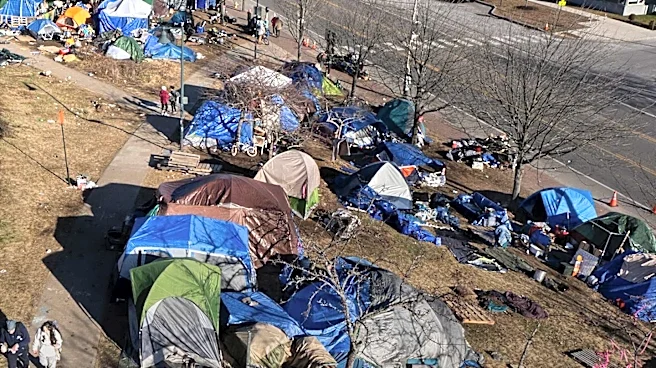
Carlos Ramirez-Rosa, CEO of the Chicago Park District, has been lauded for his effective management of the city's 9,000 acres of parkland, particularly in addressing the issue of homelessness within parks. Initially met with skepticism due to his past
political views, Ramirez-Rosa has adopted a pragmatic approach, balancing a 'housing-first' directive from the city with a firm stance against long-term encampments in parks. He has implemented a case-by-case enforcement policy, prioritizing the removal of tents from playgrounds while handling less disruptive encampments differently. His administration has also enhanced security measures, including upgrading surveillance systems with over 360 cameras connected in real-time, and hiring former police and security professionals, such as Chris Kennedy, former Chicago Police Department deputy chief of counterterrorism, to head public safety. Additionally, the Park District has hired a homeless support specialist, Dannette Salaam, to connect individuals experiencing homelessness with service providers.
Why It's Important?
Ramirez-Rosa's leadership in the Chicago Park District is significant as it demonstrates a practical approach to managing complex urban issues like homelessness and public safety within recreational spaces. His strategy of combining compassionate outreach with enhanced security and clear policies on encampments could serve as a model for other major U.S. cities grappling with similar challenges. The focus on real-time surveillance and professional security personnel highlights a growing trend in urban management to leverage technology for public safety. Furthermore, his ability to navigate political divides and focus on effective governance, despite his self-identified democratic socialist background, underscores the potential for pragmatic solutions in politically charged environments. The success or failure of these initiatives in Chicago could influence how other municipalities address the delicate balance between providing public services and maintaining safe, accessible public spaces.
What's Next?
The Chicago Park District under Carlos Ramirez-Rosa is expected to continue refining its approach to homelessness and public safety. Future steps will likely involve further integration of technology for surveillance and response, as well as ongoing efforts to connect individuals experiencing homelessness with appropriate services. The effectiveness of the 'housing-first' approach, combined with the enforcement of park rules, will be closely monitored, particularly by activist groups like Parks for All, who have previously criticized the administration's methods. The Park District may also explore additional partnerships with social service organizations to enhance support for vulnerable populations. The long-term impact of these policies on both the park system and the broader issue of homelessness in Chicago will be a key area of observation, potentially influencing future urban planning and social policy discussions.
Beyond the Headlines
The management of Chicago's parks by Carlos Ramirez-Rosa touches upon deeper societal implications regarding the use of public spaces, the balance between compassion and order, and the role of government in addressing complex social issues. The tension between activists advocating for unrestricted access for homeless individuals and the administration's goal of maintaining clean and safe parks for all users highlights a fundamental debate about public commons. The increased surveillance, while aimed at improving safety, also raises questions about privacy and the potential for over-policing in public areas. Ramirez-Rosa's experience also underscores the evolving nature of political leadership, where pragmatic management skills are increasingly valued over strict ideological adherence, even for individuals with strong political leanings. This situation reflects a broader national conversation about how cities can effectively manage homelessness while preserving the quality and accessibility of public amenities for all citizens.