







What's Happening?
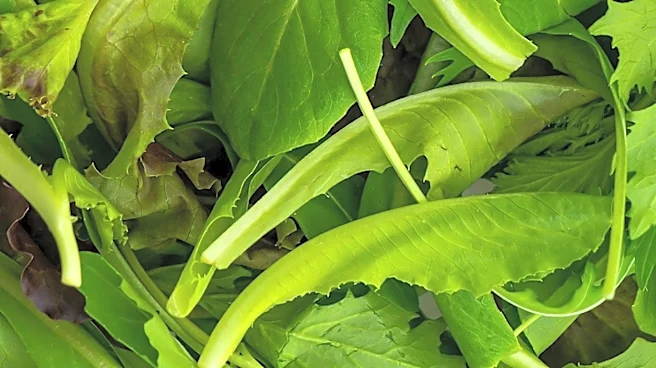
A significant outbreak of cyclospora, a parasite causing intestinal illness, has been reported in Kansas and Missouri, with case numbers reaching 289 and 593 respectively. The parasite, spread through contaminated water or food, has been tentatively linked
to leafy greens. The illness, known as cyclosporiasis, can cause symptoms such as diarrhea, nausea, and fatigue, lasting for a month or more. The outbreak has led some residents to opt for locally grown produce, hoping it is safer. However, experts caution that no farm is immune to food safety issues, though smaller farms may have some advantages in traceability and handling.
Why It's Important?
The cyclospora outbreak highlights vulnerabilities in the food supply chain, particularly concerning produce safety. With the parasite linked to leafy greens, there is increased scrutiny on agricultural practices and food safety standards. This situation underscores the importance of rigorous food safety protocols to prevent such outbreaks. The shift towards local produce reflects consumer concerns about food safety and the desire for more traceable food sources. This trend could impact local economies positively, as more consumers turn to local farms, but it also raises questions about the scalability of local food systems to meet increased demand.
What's Next?
Federal officials are continuing to investigate the source of the outbreak, which could lead to more stringent regulations on produce safety. Consumers are advised to wash produce thoroughly and stay informed about recalls. The outbreak may prompt a reevaluation of food safety practices at both large and small farms, potentially leading to policy changes. Local farms might see sustained interest if they can maintain consumer trust through transparent practices. The situation also presents an opportunity for public health education on safe food handling and the benefits of supporting local agriculture.