





What's Happening?
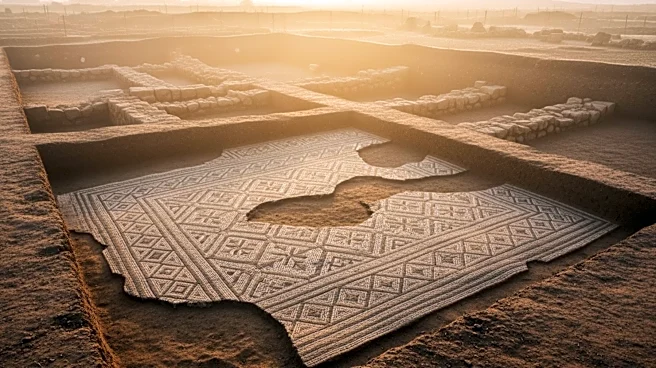
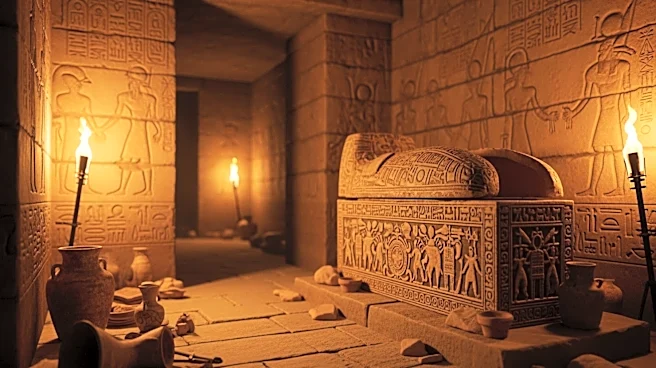
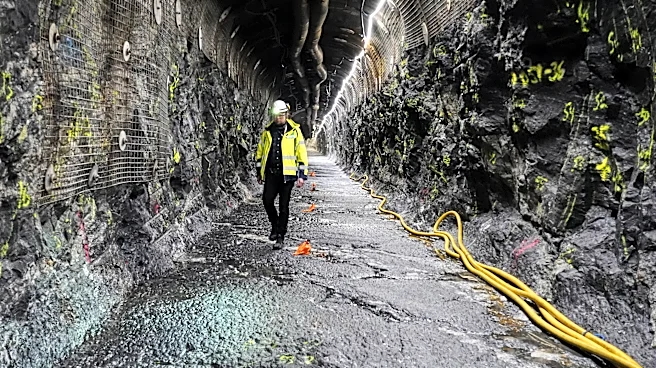
Archaeologists in Egypt have opened ancient rock-cut tombs, uncovering treasures and artifacts that provide a deeper understanding of burial practices and social hierarchies in ancient Egyptian society. These tombs, part of a larger necropolis, reveal
a complex vision of life and death, with intricate passageways and a variety of artifacts including pottery, tools, and personal items. The findings suggest a sophisticated level of planning and craftsmanship, indicating that these tombs were not merely burial sites but also symbolic environments for the afterlife. The discovery challenges previous assumptions about uniform burial customs, highlighting local adaptations and evolving traditions.
Why It's Important?
This discovery offers significant insights into the cultural and social dynamics of ancient Egypt, challenging long-held beliefs about their burial practices. By revealing the personal stories and daily life artifacts, the findings provide a more nuanced understanding of how ancient Egyptians viewed death and the afterlife. This has implications for historians and archaeologists, as it prompts a reevaluation of existing theories and encourages further exploration of regional variations in ancient practices. The preservation of these artifacts also allows for detailed study, contributing to a broader understanding of ancient civilizations and their development over time.