



What's Happening?
The Philippines has announced a significant gas discovery in the contested South China Sea, marking the country's first such find in over a decade. President Ferdinand Marcos Jr. revealed that the deposit, estimated to contain 98 billion cubic feet of
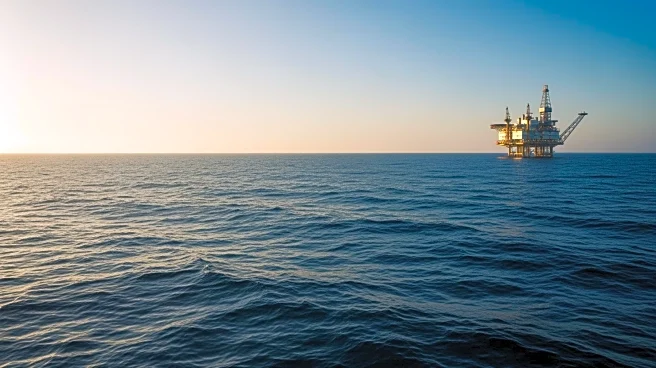
gas, could power approximately 5.7 million households. This discovery is located near the existing Malampaya gas field, which is crucial for the country's energy supply, providing 20% of the energy needs for Luzon, the main island. The new reservoir, Malampaya East-1, is expected to produce up to 60 million cubic feet per day. The discovery was made by a consortium of Philippine companies, highlighting the nation's growing capabilities in energy development.
Why It's Important?
This discovery is pivotal for the Philippines as it seeks to enhance its energy independence and reduce reliance on imported energy. The Malampaya field, the country's only indigenous gas source, was nearing depletion, posing a risk to energy security. The new find could extend the life of Malampaya and stabilize the domestic gas supply. Additionally, the South China Sea is a region of geopolitical tension, with multiple countries, including China, claiming parts of it. The discovery underscores the strategic importance of the area and could influence regional energy politics and security dynamics.
What's Next?
The Philippines plans to continue exploring additional potential gas deposits to further bolster its energy reserves. The Department of Energy is monitoring drilling at two more sites, with initial results expected by the end of the first quarter. This ongoing exploration could lead to further discoveries, enhancing the country's energy security and economic stability. The development of these resources will require careful navigation of geopolitical tensions in the South China Sea, particularly with China, which has been assertive in its territorial claims.