





What's Happening?
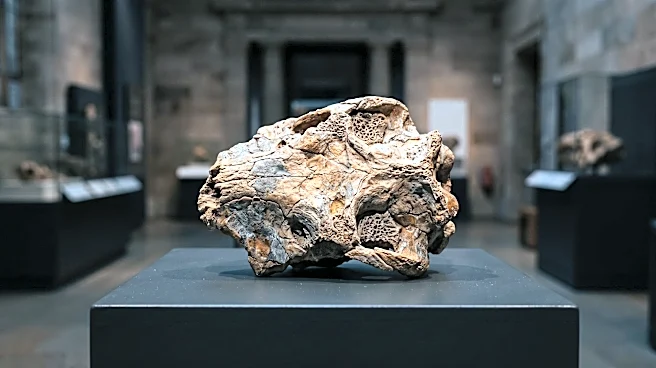
A new species of carnivorous dinosaur, named Invictibellatrix amberina, has been identified from a fossil that remained unstudied for nearly a century in the Natural History Museum, London. This discovery, made by a team led by researchers from University
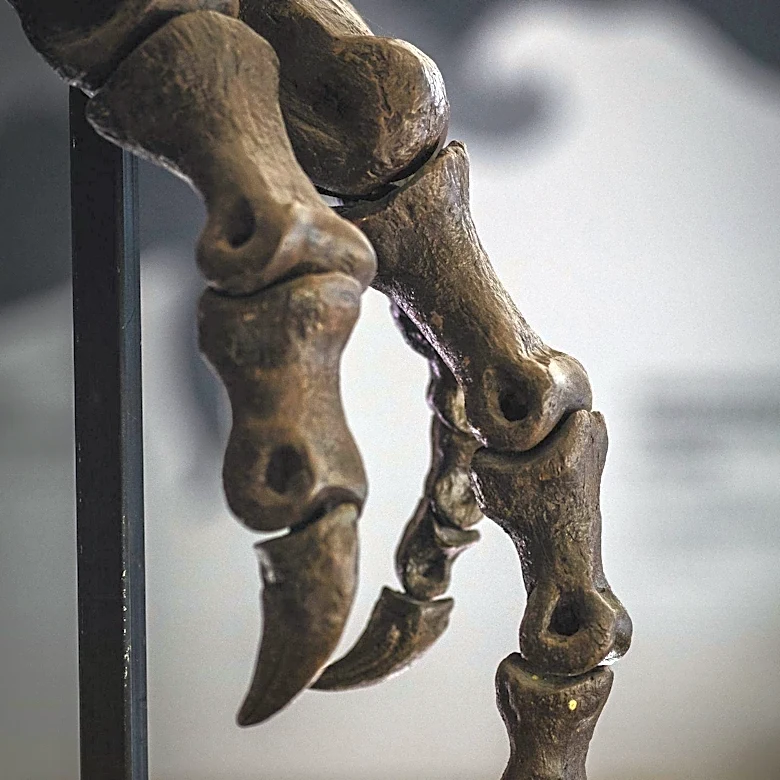
College London (UCL), marks the first representative of the Megaraptoridae family found in Europe. The fossil, a fragment of the posterior part of the animal’s skull, was originally found on the Isle of Wight, off the south coast of England, and acquired by the museum in 1924. Using computed tomography, researchers created 3D models of the bone fragment and the interior of the skull, including the brain region. Comparisons with other carnivorous dinosaur fossils, such as tyrannosaurs and spinosaurs, revealed a unique combination of anatomical features, confirming it as a new species. Invictibellatrix amberina is estimated to have been between three and four meters long, over one and a half meters tall, and possessed claws between 10 and 20 centimeters long. Its diet likely consisted of small dinosaurs, lizards, and mammals.
Why It's Important?
This discovery is significant for understanding the evolutionary history and geographic distribution of megaraptorids. Previously, the absence of fossils from this group in Europe created a gap in the hypothesis that they originated in Asia, dispersed across Europe, and then reached Gondwana (the ancient southern supercontinent including Africa, South America, and Antarctica). The identification of Invictibellatrix amberina provides crucial fossil evidence supporting this dispersal route via Europe. It indicates that megaraptorids had a broad geographic distribution during the Early Cretaceous before disappearing from northern regions tens of millions of years later. In the Late Cretaceous, some megaraptorid species in Gondwana evolved to gigantic dimensions with claws up to 35 centimeters long, becoming apex predators. The study also highlights the scientific value of historical museum collections, demonstrating that specimens collected long ago can still yield new information about prehistoric life and evolution.
What's Next?
The study does not definitively explain why megaraptorids disappeared from northern regions like Europe. Future research may focus on investigating hypotheses such as climate and environmental changes, or competition with other predators, including different groups of tyrannosaurs, to understand this decline. The ongoing analysis of existing museum collections could lead to further discoveries, as the authors emphasize the potential of these historical specimens to provide new insights into the evolution and distribution of ancient animals. Continued paleontological studies will aim to clarify the broader ecological context and the factors influencing the rise and fall of various dinosaur groups across different continents.
Beyond the Headlines
The identification of Invictibellatrix amberina underscores the enduring importance of paleontological research and the often-overlooked potential within existing museum archives. This 'forgotten' fossil serves as a powerful reminder that significant scientific breakthroughs can emerge from re-examining previously collected data and specimens with new technologies and analytical methods. It also highlights the dynamic nature of scientific understanding, where new evidence can reshape long-held theories about ancient ecosystems and species migration. The story of Invictibellatrix amberina contributes to a more complete picture of dinosaur diversity and distribution, challenging previous assumptions and encouraging a deeper appreciation for the vast, unexplored knowledge contained within our scientific institutions.