





What's Happening?
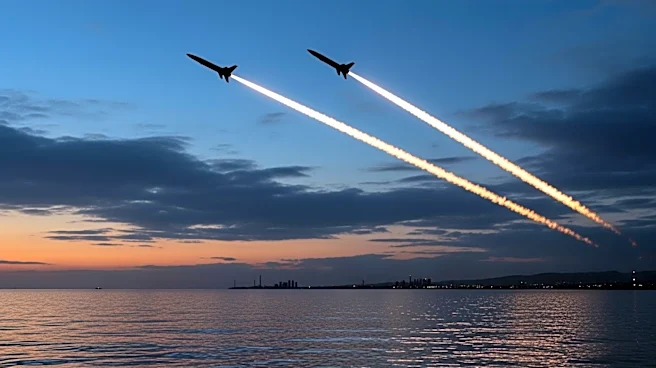
The US military has reported that Iran launched seven ballistic missiles targeting Kuwait and Bahrain. This development has been confirmed by the US Central Command, which stated that the missiles were intercepted before reaching their intended targets.
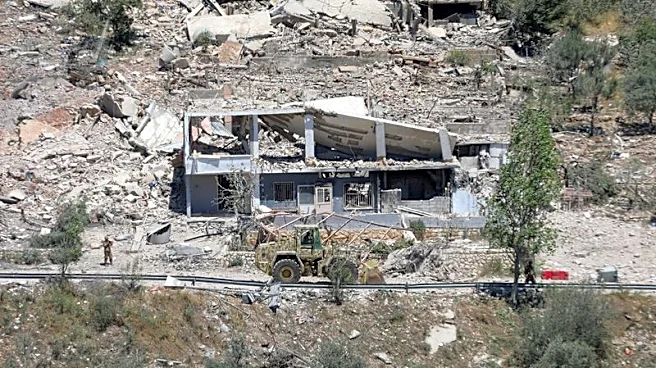
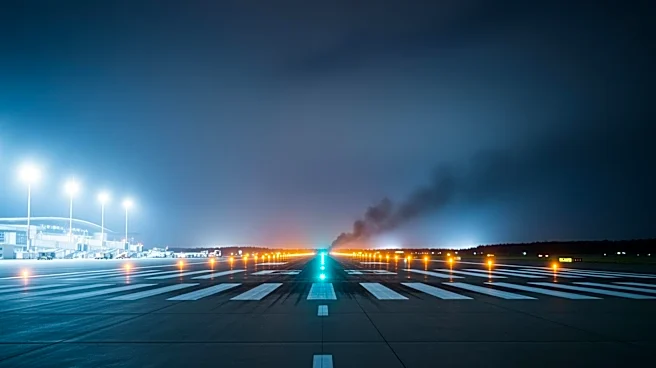
The incident marks a significant escalation in regional tensions, with Iran's Revolutionary Guards claiming to have hit 'enemy bases' in the Gulf. The US forces responded by striking Iranian coastal surveillance radar sites. This exchange follows a series of hostile actions, including the interception of Iranian drones by US forces. The situation has drawn international attention, with Bahrain condemning the attacks as a violation of its sovereignty. The US has also approved a $1.98 billion arms sale to Kuwait, aimed at bolstering its defense capabilities against such threats.
Why It's Important?
This incident underscores the volatile nature of Middle Eastern geopolitics and the potential for conflict to disrupt global stability. The missile launches by Iran and the subsequent US military response highlight the ongoing tensions between Iran and the US, as well as their allies in the region. The escalation could have significant implications for international relations and global oil markets, given the strategic importance of the Gulf region. The US arms sale to Kuwait is indicative of the broader security dynamics at play, as countries in the region seek to enhance their defense capabilities in response to perceived threats. The situation also raises concerns about the potential for further military confrontations, which could have far-reaching consequences for regional and global security.
What's Next?
The immediate future may see increased diplomatic efforts to de-escalate tensions, although the potential for further military actions remains. The US and its allies are likely to continue monitoring the situation closely, with possible adjustments to their military presence and strategies in the region. Iran's actions may prompt further international condemnation and could lead to additional sanctions or diplomatic measures aimed at curbing its missile capabilities. The situation also places pressure on regional actors to engage in dialogue and seek peaceful resolutions to avoid further conflict. The international community will be watching closely to see how these developments unfold and what measures are taken to prevent an escalation into a broader conflict.