






What's Happening?
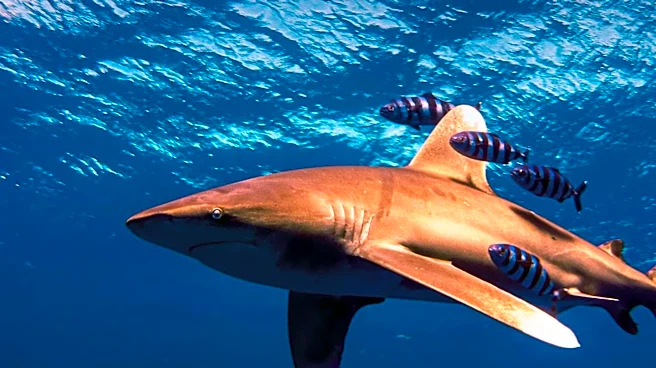
Matthew Devine, a surfer in New South Wales (NSW), Australia, had a close encounter with a shark at Cabarita Beach. While in the water on a Sunday, Devine was knocked from his surfboard and thrown into the ocean. Footage captured the shark circling before
it reportedly grabbed his leg. Devine managed to paddle back to shore and alert local lifesavers. He expressed immense relief and gratitude for escaping without serious injury. This incident is not isolated, as Cabarita Beach has seen several shark encounters in recent years, including a great white shark biting a surfer's board last year and a 16-year-old boy being attacked weeks prior to that. Shark Safe NSW recommends measures to reduce risk, such as staying close to shore, avoiding swimming with bleeding wounds, swimming with others, and refraining from water activities at dawn, dusk, and night.
Why It's Important?
This incident highlights the ongoing risks associated with ocean activities in areas known for shark populations, particularly in coastal regions of Australia. For local communities and tourism-dependent businesses, such events can impact public perception of safety and potentially deter visitors, affecting local economies. The repeated occurrences at Cabarita Beach underscore the need for effective shark mitigation strategies and public awareness campaigns. While the immediate impact is on individual safety, the broader implications involve balancing human recreational activities with marine wildlife conservation. The incident also serves as a reminder for authorities to continuously evaluate and update safety protocols and for individuals to adhere to recommended guidelines to minimize risks.
What's Next?
Following this incident, local authorities and surf lifesavers will likely continue to monitor Cabarita Beach and surrounding waters for shark activity. Public awareness campaigns regarding shark safety recommendations from organizations like Shark Safe NSW are expected to be reinforced. Beachgoers will be advised to exercise increased caution and adhere to safety guidelines, including avoiding swimming at certain times and in specific conditions. The ongoing presence of sharks in the area may prompt further discussions on long-term shark management strategies, such as drone surveillance or other non-lethal deterrents, to ensure both public safety and marine ecosystem health. The community will remain vigilant, and any future sightings or incidents will likely lead to temporary beach closures and heightened alerts.
Beyond the Headlines
The recurring shark encounters at Cabarita Beach, and more broadly along the Australian coast, bring to light the complex relationship between humans and marine predators. These events often spark debates about conservation versus public safety, and the most ethical and effective ways to manage these interactions. There's a growing emphasis on understanding shark behavior and implementing non-invasive mitigation techniques rather than culling. The psychological impact on local communities and surfers, who often have a deep connection to the ocean, is also significant, potentially leading to increased anxiety or changes in recreational habits. This ongoing challenge requires a multi-faceted approach, combining scientific research, technological advancements, and community education to foster coexistence.