




What's Happening?
Death Valley National Park, known as the lowest, hottest, and driest national park in the U.S., presents a wide array of unique landscapes and historical attractions. Visitors can explore singing sand dunes, walk on salt flats 282 feet below sea level,
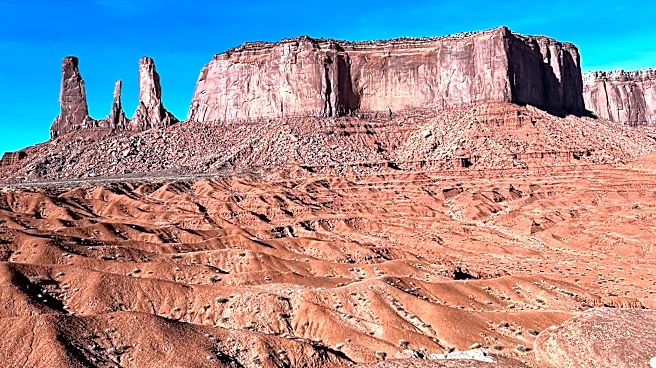
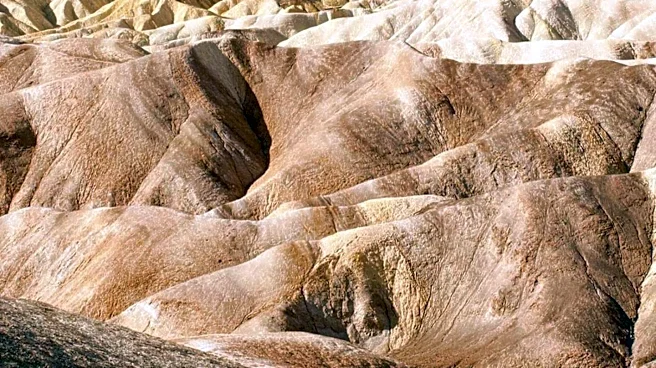
and discover a desert castle. The park features diverse geological formations such as the colorful mineral-stained hills of Artist's Palette, the badlands of Zabriskie Point, and the polished marble narrows of Mosaic Canyon. Historical sites like Harmony Borax Works, which operated in the late 19th century, and various ghost towns like Rhyolite, offer a glimpse into the region's mining past. The park also boasts natural phenomena such as the sailing stones of Racetrack Playa and the year-round Darwin Falls, an unexpected oasis in the desert. Death Valley holds Gold Tier status as an International Dark Sky Park, making it an exceptional location for stargazing.
Why It's Important?
Death Valley National Park's unique geological features and extreme environment make it a significant natural wonder, attracting tourists and researchers alike. Its status as an International Dark Sky Park highlights its importance for astronomy and environmental conservation, offering pristine conditions for observing celestial phenomena. The historical sites within the park, including former mining operations and ghost towns, provide valuable insights into the challenges and economic drivers of early American expansion in harsh environments. The park's diverse ecosystems, such as the habitat for the Salt Creek pupfish, underscore its ecological importance and the need for conservation efforts. The ongoing repairs at Scotty's Castle following a flash flood also emphasize the vulnerability of historical structures to natural events and the continuous effort required for their preservation.
What's Next?
Visitors planning a trip to Death Valley National Park should be aware of current road conditions and closures, as flash floods can impact accessibility. For instance, Titus Canyon Road is closed until at least May 2027, and the road to Darwin Falls is expected to remain closed to vehicles until summer 2027. Tours of Scotty's Castle grounds are available on select Saturdays and Sundays from October 2026 to April 2027, with tickets requiring advance booking. The park also hosts ranger-led night sky programs and a Dark Sky Festival in February, offering opportunities for stargazing. It is recommended to visit during cooler months, from November to March, for hiking and to carry ample water due to the extreme heat, especially during summer when temperatures can exceed 120°F (49°C).
Beyond the Headlines
The extreme conditions and unique geological formations in Death Valley National Park offer a living laboratory for studying environmental resilience and adaptation. The 'singing' Eureka Dunes, for example, present a rare acoustic phenomenon that continues to intrigue scientists. The park's history of borax mining and the 'twenty-mule teams' symbolize a significant chapter in American industrial development and the resourcefulness required to extract valuable minerals from challenging terrains. The preservation of ghost towns like Rhyolite serves as a poignant reminder of boom-and-bust cycles and the transient nature of human settlements driven by resource exploitation. The park's commitment to dark sky preservation also raises broader questions about light pollution and its impact on wildlife, human health, and our connection to the cosmos.