
What's Happening?
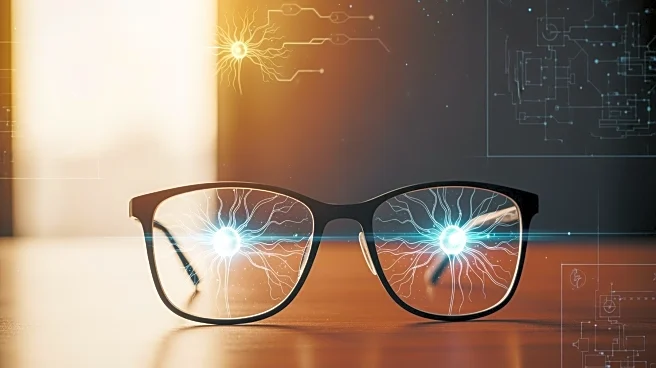
Millie Childs, a young inventor from Salford, has been awarded the Gold Award in the Primary Engineer MacRobert Medal for her innovative creation aimed at assisting individuals with dyslexia. Her invention,
known as Rainbow Glasses, features LED-based lenses that can change colors to reduce visual stress and improve reading comfort for dyslexic users. The glasses were developed as part of a national STEM competition, Primary Engineer, which encourages students to design solutions to real-world problems. Engineers from Thales UK helped transform Millie's concept into a working prototype, which has already attracted interest from the NHS. Millie, now a Year 7 student at Co-Op Academy Swinton, was recognized for her achievement at a ceremony in London, where her former teacher collected the award on her behalf.
Why It's Important?
Millie's invention represents a significant advancement in assistive technology for individuals with dyslexia, a condition that affects reading and comprehension skills. By providing a customizable solution that can adapt to the specific needs of users, the Rainbow Glasses have the potential to improve educational outcomes and quality of life for many. The recognition of her work by a prestigious engineering award highlights the importance of encouraging young minds to engage in STEM fields, fostering innovation and problem-solving skills. Furthermore, the interest from the NHS suggests that this invention could be integrated into broader healthcare solutions, potentially benefiting a large number of people across the UK and beyond.
What's Next?
Following the success of the Rainbow Glasses prototype, there is potential for further development and commercialization of the product. The interest from the NHS indicates a possible pathway for the glasses to be adopted as a standard tool for dyslexia support, which could lead to widespread use in educational and healthcare settings. Additionally, Millie's achievement may inspire other young inventors to pursue engineering and technology, contributing to a future generation of innovators. Continued collaboration with engineering firms and educational institutions could enhance the design and functionality of the glasses, making them more accessible and effective for users.
Beyond the Headlines
Millie's journey from concept to award-winning invention underscores the transformative power of education and mentorship in STEM fields. Her story highlights the role of competitions like Primary Engineer in nurturing young talent and providing a platform for creative ideas to flourish. The success of the Rainbow Glasses also raises awareness about dyslexia and the need for tailored solutions to support those affected by it. As society becomes more inclusive, innovations like Millie's can play a crucial role in breaking down barriers and promoting equal opportunities for all individuals, regardless of their challenges.