





What's Happening?
The National Labor Relations Board (NLRB) Division of Advice has concluded that Microsoft lawfully terminated two employees who organized a protest concerning the war in Gaza at the company's Redmond, Washington headquarters. The NLRB determined that the protest's
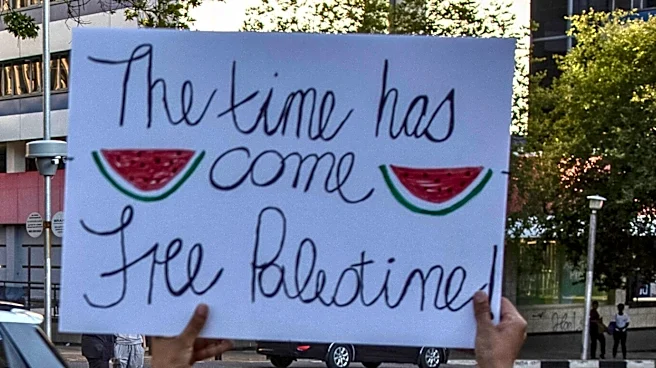
connection to workplace concerns was too tenuous to warrant protection under the National Labor Relations Act (the Act). In May 2024, Microsoft employees initiated a petition demanding, among other things, that the company sever its Azure contracts with the Israeli government. Months later, the two employees organized an on-campus demonstration involving a walkout, vigil, speaker series, and fundraiser. Microsoft security informed the organizers that the event could not take place on campus and advised them to move to public property. After repeated requests were ignored, Microsoft terminated the employees for violating company policy and disregarding security directives.
Why It's Important?
This decision provides significant guidance on the scope of protected employee activity under the National Labor Relations Act, particularly in an era of heightened employee activism. The NLRB's ruling clarifies that for a protest to be protected, a genuine workplace demand must be an objective of the protest, not merely an indirect or secondary consideration. This distinction is crucial for employers and employees alike, as it helps define the boundaries of permissible protest within a corporate setting. The ruling suggests that protests primarily focused on broader political or social issues, without a direct and substantial link to employees' working conditions, may not receive the same protections as those directly addressing workplace grievances. This could influence how companies manage employee activism and how employees choose to express their views on non-work-related matters.
What's Next?
The Advice Memorandum indicates that General Counsel Crystal Carey disagrees with the precedent set in *Home Depot USA, Inc.*, a case where an employee's refusal to remove a 'BLM' message was deemed protected activity due to its connection to workplace racial discrimination. Carey intends to urge the Board to overturn *Home Depot* in an appropriate future case. This signals potential shifts in the interpretation of protected concerted activity under the Act, particularly regarding the nexus between social or political protests and workplace concerns. Future cases will likely further refine the legal standards for determining when employee protests, especially those with mixed motives, fall under the Act's protection. Employers will need to closely monitor these developments to ensure compliance with evolving labor laws.
Beyond the Headlines
This case delves into the complex intersection of free speech, employee rights, and corporate policy. While employees generally have the right to engage in concerted activities for mutual aid or protection, this ruling highlights that such protections are not absolute and are primarily tied to workplace-related issues. The decision raises questions about the extent to which companies can regulate employee expression on their premises, especially when the expression pertains to external political or social causes. It also underscores the challenge for employers in balancing employee rights with maintaining order, productivity, and adherence to company policies. The ongoing debate and potential re-evaluation of precedents by the NLRB suggest a dynamic legal landscape where the boundaries of employee activism will continue to be tested and redefined.