



What's Happening?
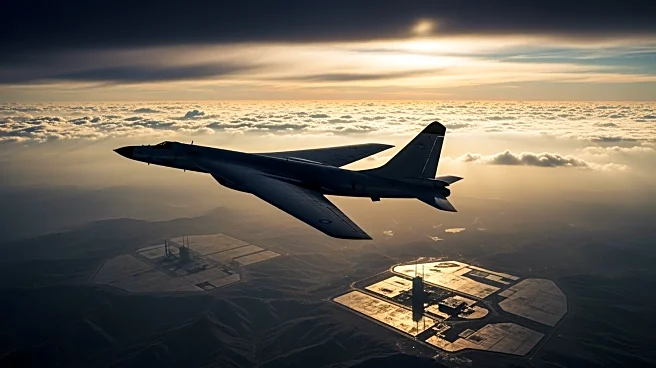
The United States Air Force has utilized its oldest bomber, the B-52 Stratofortress, in a series of airstrikes against Iran as part of Operation Epic Fury. Since the operation began on February 28, U.S. forces have targeted 2,000 sites in Iran, focusing
on ballistic missile facilities and command-and-control infrastructure. The B-52, alongside the B-1 Lancer, has been instrumental in establishing local air superiority, according to Gen. Dan Caine, chairman of the Joint Chiefs of Staff. The B-52, first flown in 1952, is capable of carrying both nuclear and precision-guided conventional ordnance, with a payload capacity of approximately 70,000 pounds. This strategic bomber has a long history of service, having been deployed in conflicts such as Vietnam, Desert Storm, and the Global War on Terror.
Why It's Important?
The deployment of the B-52 bombers in Iran underscores the U.S. military's reliance on proven, long-serving aircraft to achieve strategic objectives. The strikes aim to degrade Iran's missile capabilities and disrupt its command infrastructure, potentially altering the balance of power in the region. This military action could have significant implications for U.S.-Iran relations, potentially escalating tensions and impacting diplomatic efforts. The operation also highlights the U.S. military's capability to project power and maintain air superiority, which is crucial for protecting American interests and allies in the Middle East.
What's Next?
The continuation of Operation Epic Fury may lead to further military engagements in the region, with potential responses from Iran and its allies. The U.S. military's actions could provoke retaliatory measures, impacting regional stability and international relations. Monitoring the situation closely, political leaders and defense analysts will likely assess the operation's effectiveness and its implications for future U.S. military strategy. Additionally, the use of the B-52 in modern conflicts may prompt discussions on the future of military aviation and the need for technological advancements in defense capabilities.