

What's Happening?
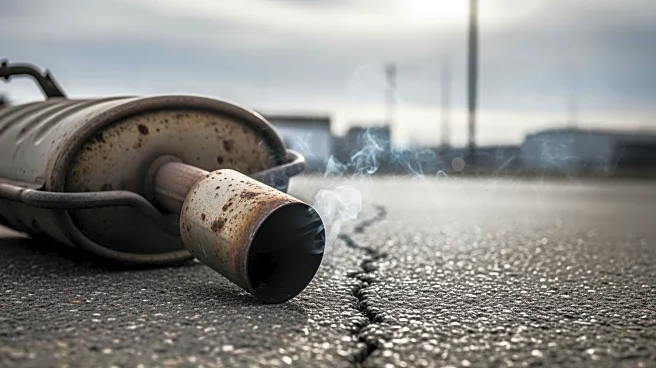
The New Hampshire Executive Council has voted against extending the state's emissions testing contract with Gordon-Darby, a Kentucky-based contractor, despite a U.S. District Court judge's order to continue the vehicle inspection program. The council's
decision, made during an emergency meeting, defies the federal court's directive and the requirements of the Clean Air Act. The contract with Gordon-Darby, which has been providing electronic equipment for emissions testing since 2004, was set to expire on January 31. The council's vote was split 3-2, with councilors John Stephen, Joseph Kenney, and David Wheeler opposing the extension, while Karen Liot Hill and Janet Stevens supported it. The decision has created uncertainty for drivers and over 1,800 inspection stations in New Hampshire, as the state risks noncompliance with federal pollution control laws, which could result in penalties and loss of federal highway funding.
Why It's Important?
The council's decision to end the emissions testing contract has significant implications for New Hampshire's compliance with federal environmental regulations. By discontinuing the program, the state risks violating the Clean Air Act, which could lead to federal penalties of up to $55,000 per day and potential loss of federal highway funds. This move also highlights a conflict between state and federal policies, as the New Hampshire Legislature had previously directed the end of the inspection program. The decision has caused confusion among drivers and inspection stations, as the state navigates the legal and practical ramifications of the council's vote. The situation underscores the challenges states face in balancing local legislative actions with federal environmental mandates.
What's Next?
The New Hampshire Department of Justice and Department of Safety are currently assessing the legal and practical consequences of the Executive Council's decision. Without the contract extension, the state may issue a request for proposals to find an alternative vendor to Gordon-Darby. Meanwhile, the state awaits the Environmental Protection Agency's review of its proposal to change air pollution control protocols, which could take 12 to 18 months. Additionally, new legislation is being considered to address the confusion surrounding vehicle inspections, including a proposed amendment to lower fines for noncompliance and prevent law enforcement from stopping vehicles without inspection stickers. The outcome of the ongoing lawsuit with Gordon-Darby and the EPA's decision will be critical in determining the future of New Hampshire's emissions testing program.