



What's Happening?
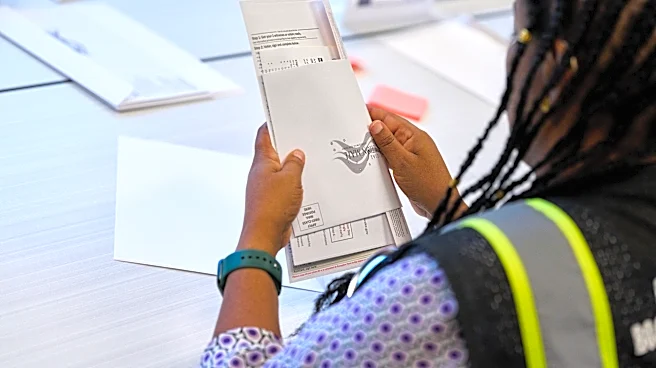
A federal judge in Boston has indefinitely extended her order preventing the Trump administration from implementing new restrictions on mail-in ballots. The proposed plan would have required states to use scannable ballot envelopes and provide the federal government
with lists of voters eligible to receive mail ballots. This ruling comes as North Carolina began mailing out ballots for the November election, becoming the first state to do so. The judge's decision, issued after a hearing, found that the Trump administration's order was unconstitutional, violating Article I, Section 4 of the Constitution, which grants authority to run elections solely to state legislatures or Congress. Furthermore, the judge determined that the order violated several statutes regulating the U.S. Postal Service's operations, asserting that the Postal Service cannot selectively deliver mail ballots. The ruling concluded that the plaintiffs, including about half of U.S. states (mostly Democratic) and voting rights groups, were likely to win on the merits and would experience irreparable harm if the rules were applied, potentially causing chaos, confusion, and disenfranchising thousands of voters.
Why It's Important?
This judicial intervention is critical for safeguarding the integrity and accessibility of the U.S. electoral process, particularly concerning mail-in voting. The Trump administration's attempt to impose new restrictions on mail-in ballots, if successful, could have significantly altered how elections are conducted across the nation, potentially disenfranchising a substantial number of voters and creating widespread confusion. The judge's ruling reinforces the constitutional principle that states, not the executive branch, primarily govern election procedures, thereby protecting states' rights and the established legal framework for elections. This decision is especially important given the ongoing debate and increased reliance on mail-in ballots, particularly in the context of public health concerns. It ensures that election officials can continue to operate under existing state laws, providing stability and predictability for voters and administrators alike, and preventing last-minute changes that could undermine public confidence in the election outcomes.
What's Next?
While the federal judge's injunction is a significant setback for the Trump administration's efforts to restrict mail-in ballots, the administration is expected to continue its legal challenges. They had previously filed an appeal to the Supreme Court regarding an earlier temporary restraining order, and new appeals are anticipated following this more permanent injunction. However, experts, including David Becker of the Center for Election Innovation and Research, express confidence that these rules will not go into effect for the upcoming election, citing the advanced stage of ballot preparation and mailing by states. The Supreme Court may need to set new briefings to address the updated ruling. States, as advised by election officials like Derek Bowens of Durham County, North Carolina, will continue to follow their respective state laws regarding mail-in ballots. The ruling does leave open the possibility for states to voluntarily comply with the new postal rules, though no state has indicated an intention to do so, highlighting the perceived impracticality and potential negative impact of these regulations.
Beyond the Headlines
This legal battle over mail-in ballots extends beyond immediate election procedures, touching upon fundamental aspects of American democracy and federalism. The Trump administration's efforts to centralize control over election mechanics, traditionally a state responsibility, raise deeper questions about the balance of power between federal and state governments. The judge's emphasis on the Elections Clause of the Constitution underscores the historical and legal precedent for state-led election administration. Furthermore, the case highlights the critical role of the judiciary in acting as a check on executive power, particularly when actions are perceived to undermine constitutional principles or potentially disenfranchise citizens. The controversy also reflects broader societal tensions regarding voting access, election security, and partisan divisions, suggesting that debates over election rules will likely persist and evolve, shaping future electoral landscapes and potentially influencing legislative reforms at both state and federal levels.