





What's Happening?
The mayor of Newark, New Jersey, Ras Baraka, has implemented a curfew around Delaney Hall, an immigration detention center, following a series of confrontations between protestors and law enforcement. The curfew, effective from 9 p.m. to 6 a.m., was announced
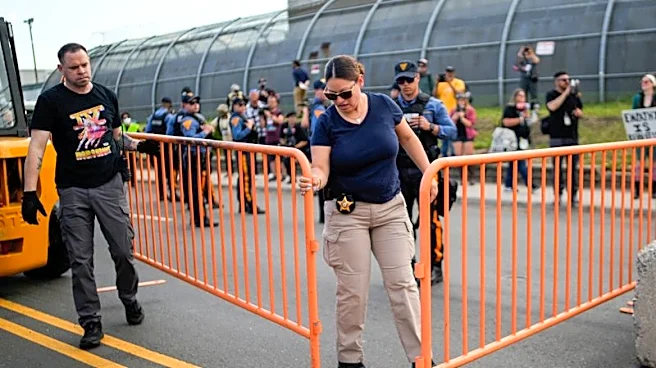
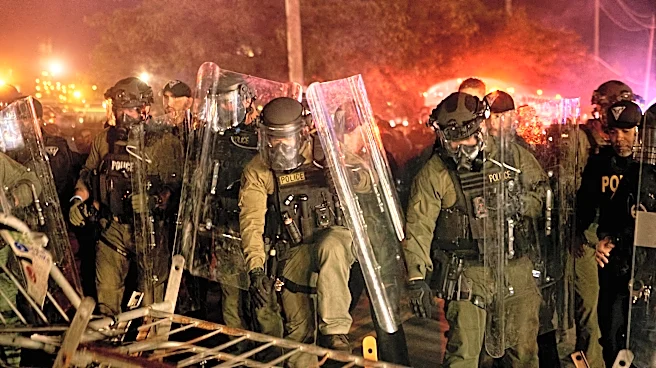
after another night of intense standoffs where protestors clashed with police, who used riot shields to maintain order. The protests began earlier in the month, sparked by reports of detainees launching a hunger strike over poor conditions at the facility. The situation escalated with protestors reportedly using barriers as weapons and setting tires on fire. New Jersey Governor Mikie Sherrill condemned the violence, emphasizing the need for peaceful advocacy for better conditions and the potential closure of the facility. The federal government has since reopened family visitations at Delaney Hall, which had been suspended due to the unrest.
Why It's Important?
The events at Delaney Hall highlight ongoing tensions surrounding immigration policies and detention conditions in the United States. The protests and subsequent curfew underscore the broader national debate over immigration enforcement and detainee treatment. The situation reflects the challenges faced by local and state authorities in balancing security and civil liberties. The reopening of family visitations marks a significant development, potentially easing tensions and allowing for more humane treatment of detainees. The incident also raises questions about the federal government's role in managing immigration facilities and the impact of local protests on national policy.
What's Next?
The curfew will remain in place until further notice, suggesting ongoing monitoring of the situation by local authorities. Stakeholders, including immigration advocates and government officials, may continue to push for reforms at Delaney Hall and similar facilities. The federal government's response to the protests and the conditions at the detention center could influence future policy decisions. Additionally, the resumption of family visitations may lead to further dialogue between detainees' families, advocacy groups, and government agencies, potentially impacting future operations at the facility.