
What's Happening?
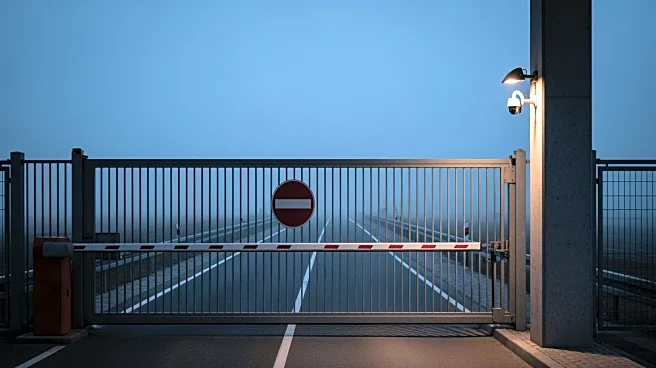
Estonia has announced a ban on 261 Russian individuals who participated in the conflict in Ukraine from entering the country. This decision, declared by the Estonian interior ministry, is part of a broader
effort to prevent those who have committed atrocities in Ukraine from accessing the 'free world.' Estonia, which shares a border with Russia, has been a vocal advocate for a Europe-wide visa ban on Russian veterans of the Ukraine war. The Estonian government estimates that approximately 1.5 million Russians have been involved in the invasion, with about half serving on the front lines. Interior Minister Igor Taro emphasized the potential threat posed by these individuals, citing their combat experience and possible criminal backgrounds. The ban was officially implemented last week and publicized on social media by Estonian officials. Foreign Minister Markus Tsahkna and Prime Minister Kristen Michal have both called for other countries to adopt similar measures, highlighting the importance of accountability for war crimes and the security of Europe.
Why It's Important?
The ban reflects Estonia's proactive stance on regional security and its commitment to holding individuals accountable for actions in the Ukraine conflict. By restricting entry to those involved in the war, Estonia aims to mitigate potential security threats posed by individuals with military training and combat experience. This move is significant as it sets a precedent for other European nations to consider similar actions, potentially leading to a broader regional policy against Russian veterans of the Ukraine war. The decision also underscores the ongoing tensions between Russia and its neighboring countries, particularly those in the Baltic region, which have historically been wary of Russian military aggression. The support from Ukraine's Foreign Minister Andrij Sybiga further emphasizes the international dimension of this issue, as Ukraine seeks to ensure that those responsible for war crimes face consequences.
What's Next?
Estonia's call for other countries to implement similar bans could lead to a coordinated European response, increasing diplomatic pressure on Russia. If more countries follow suit, it could result in a significant diplomatic rift between Russia and the European Union. Additionally, the ban may prompt discussions within international bodies such as the United Nations regarding the treatment of individuals involved in conflicts and the measures necessary to ensure global security. Estonia's actions may also influence NATO's strategic considerations in the region, as the alliance continues to address security challenges posed by Russia's actions in Ukraine.
Beyond the Headlines
The ban raises questions about the balance between national security and individual rights, particularly concerning the freedom of movement within Europe. It also highlights the ethical considerations of punishing individuals based on their participation in a conflict, which may include those who were conscripted or coerced into service. Furthermore, the move could have long-term implications for Estonia's diplomatic relations with Russia, potentially affecting trade, cultural exchanges, and regional cooperation. The decision also reflects broader geopolitical shifts, as countries reassess their security policies in response to evolving threats.