


What's Happening?
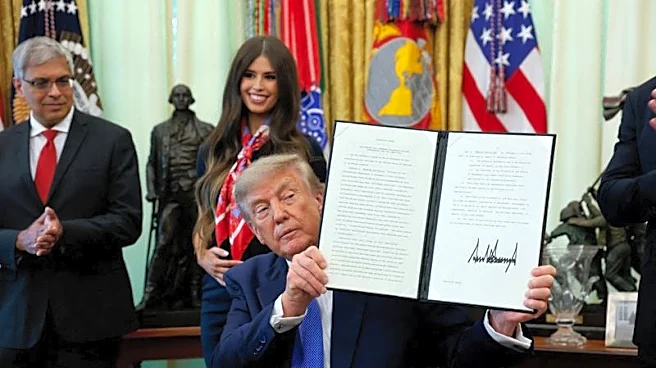
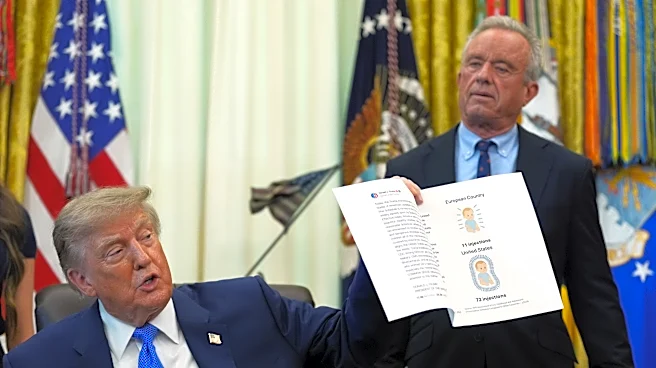
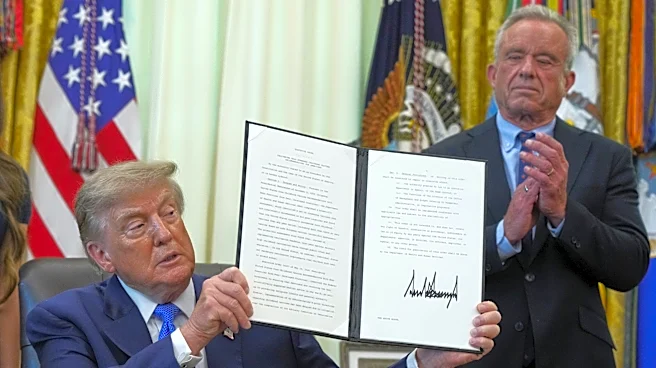
The Illinois Department of Public Health has decided not to adopt new federal child vaccine guidelines following an executive order by President Trump. The order recommends splitting the measles, mumps, and rubella (MMR) vaccine into three separate shots
and lowers recommendations for several other vaccines to high-risk groups. Illinois will continue to follow guidelines from the American Academy of Pediatrics, which recommend a comprehensive vaccine schedule for children. Governor JB Pritzker criticized the executive order, emphasizing the importance of science-based guidelines for public health.
Why It's Important?
The decision by Illinois to reject the federal guidelines underscores the ongoing debate over vaccine policies and public health. The state's stance highlights the tension between federal recommendations and state-level autonomy in public health decisions. This development is significant as it reflects broader concerns about the politicization of health policies and the potential impact on public trust in vaccines. The move by Illinois may influence other states' decisions and contribute to the national conversation on vaccine safety and efficacy, particularly in the context of rising vaccine hesitancy.
What's Next?
Illinois' decision may prompt other states to evaluate their vaccine policies and consider whether to align with federal guidelines or maintain independent standards. The issue could lead to further legal and political challenges, especially if other states follow Illinois' lead. Public health officials and advocacy groups may increase efforts to educate the public about the importance of vaccines and counter misinformation. The situation could also influence future federal health policies and the role of scientific evidence in shaping public health recommendations.