



What's Happening?
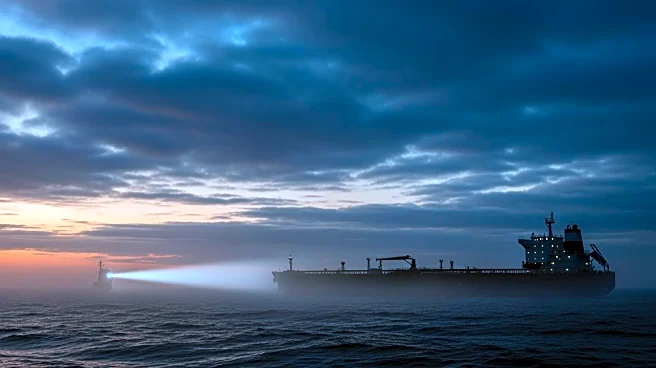
The United States Coast Guard is actively pursuing a third tanker off the coast of Venezuela, marking the latest in a series of interceptions aimed at curbing illegal sanctions evasion. According to a U.S. official, the tanker is part of a 'sanctioned
dark fleet' involved in Venezuela's efforts to bypass international sanctions. This operation follows the recent boarding of the Panamanian-flagged vessel, Centuries, by U.S. forces, which was suspected of carrying oil subject to U.S. sanctions. These actions are part of a broader U.S. strategy to pressure the government of Venezuelan President Nicolás Maduro, whom the U.S. administration seeks to oust. President Trump has ordered a 'total and complete blockade' on sanctioned oil tankers entering or leaving Venezuela, labeling the Venezuelan regime as a foreign terrorist organization. Despite these measures, neither the Centuries nor its owning company is currently under U.S. sanctions.
Why It's Important?
The U.S. actions against Venezuelan oil tankers are significant as they represent an escalation in the pressure campaign against President Maduro's government. Venezuela's economy, heavily reliant on oil exports, could face further strain due to these blockades, potentially exacerbating the country's economic challenges. The U.S. strategy aims to cut off financial resources that the Maduro regime allegedly uses to support activities deemed as 'drug terrorism.' This move has sparked international debate, with some U.S. lawmakers viewing it as a potential prelude to conflict, while others support the push for regime change. The situation underscores the geopolitical tensions surrounding Venezuela's oil industry and the broader implications for international trade and diplomatic relations.
What's Next?
The U.S. is likely to continue its enforcement actions against vessels suspected of violating sanctions, which could lead to further diplomatic tensions with Venezuela and its allies. The Venezuelan government has condemned these actions as 'theft' and 'hijacking,' and there may be retaliatory measures or increased military presence in the region. The international community will be closely monitoring the situation, as any escalation could impact global oil markets and regional stability. Additionally, U.S. lawmakers and military officials will need to navigate the risks associated with these operations, particularly the potential for conflict with Venezuelan forces.
Beyond the Headlines
The U.S. blockade of Venezuelan oil tankers highlights the complex interplay between international sanctions, economic interests, and geopolitical strategy. The focus on Venezuela's oil exports as a pressure point reflects the broader challenges of enforcing sanctions in a globalized economy. The situation also raises ethical questions about the use of military force in economic disputes and the potential humanitarian impact on the Venezuelan population. As the U.S. continues its campaign, the long-term implications for U.S.-Venezuela relations and the global energy market remain uncertain.