








What's Happening?
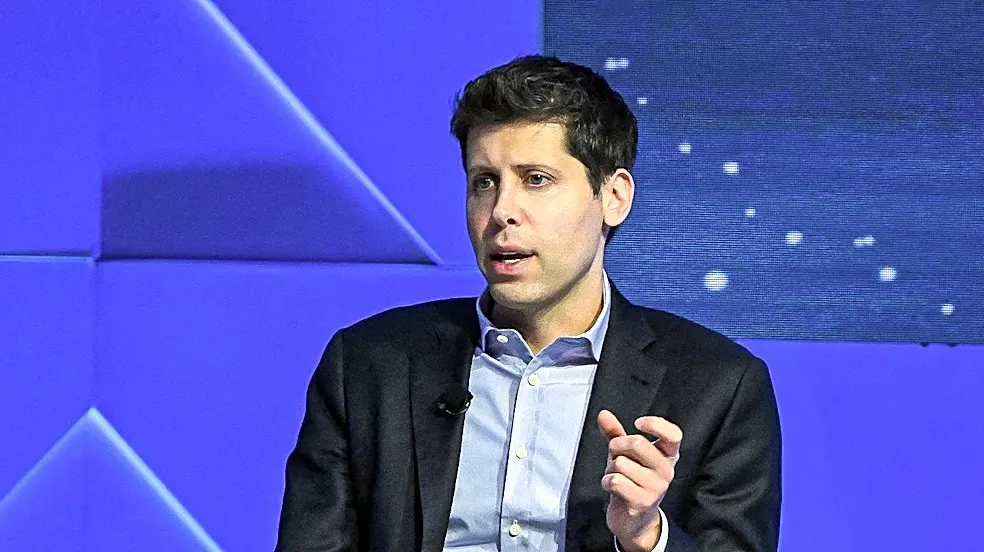
Sam Altman, CEO of OpenAI, recently outlined three potential strategies for ensuring the safety of advanced artificial intelligence during an internal staff discussion, as reported by The Information. These scenarios range from establishing an international
regulatory body to a single entity rapidly advancing AI that can self-improve. Altman emphasized the urgency of deciding on an approach within a year, advocating for a 'speed limit' or a definitive stopping point for self-improving AI systems. He reportedly favors a global enforcement agency, drawing parallels to the International Atomic Energy Agency. Another option, dubbed the 'Demis plan' after DeepMind's Demis Hassabis, suggests consolidating leading AI laboratories into a single entity serving partner nations, akin to the CERN model for particle research. The third scenario, attributed to AI researcher Eliezer Yudkowsky, involves one lab accelerating AI development to the point of overwhelming competitors' computing resources, a path Altman reportedly deemed 'terrible.' OpenAI had previously proposed international oversight in May 2023, advocating for inspections, audits, safety tests, and deployment restrictions for AI projects exceeding specific capability or computing thresholds.
Why It's Important?
The discussion around AI safety paths by a prominent industry leader like Sam Altman underscores the growing recognition within the AI community of the need for robust governance and regulation. This internal deliberation at OpenAI, a frontrunner in AI development, signals a potential shift towards more proactive measures to mitigate risks associated with advanced AI. The proposed scenarios highlight the complex challenges in balancing innovation with safety, particularly as AI capabilities rapidly evolve. The alignment of Altman's concerns with those expressed by rivals, such as Anthropic's Jack Clark, who has urged governments to prepare for rapid AI change with serious rules and restraint, indicates a broader industry consensus on the necessity for regulatory frameworks. The implications for the U.S. extend to its role in shaping global AI policy, fostering responsible technological development, and ensuring national security in an era of increasingly powerful AI systems. The debate over international oversight versus a single dominant entity also raises questions about geopolitical power dynamics and equitable access to advanced AI.
What's Next?
The immediate next step involves continued internal discussions within OpenAI and broader industry engagement to refine these proposed AI safety paths. Altman's call for a decision within a year suggests that concrete proposals or actions could emerge in the near future. Stakeholders, including governments, international organizations, and other AI companies, will likely engage in further dialogue to explore the feasibility and implications of each scenario. The U.S. government, in particular, may face pressure to develop its own comprehensive AI regulatory strategy, potentially influencing international standards. The concept of a 'speed limit' or stopping point for AI development will require significant technical and ethical consensus, necessitating collaboration among researchers, policymakers, and ethicists. Furthermore, the discussion around combining top labs or establishing a global enforcer will likely spark debates about intellectual property, national sovereignty, and the distribution of AI capabilities, setting the stage for complex international negotiations.
Beyond the Headlines
The deeper implications of Altman's proposed AI safety paths extend to fundamental questions about humanity's control over increasingly autonomous and intelligent systems. The debate touches upon the ethical responsibility of AI developers to ensure their creations benefit humanity without posing existential risks. The 'speed limit' concept, for instance, challenges the traditional Silicon Valley ethos of rapid innovation at all costs, suggesting a more cautious and deliberate approach to technological advancement. Legally, establishing an international watchdog or a consolidated lab would necessitate unprecedented levels of global cooperation and the creation of new legal frameworks to govern AI development and deployment. Culturally, these discussions reflect a growing societal awareness of AI's transformative power and the need for collective decision-making on its future. The potential for a single entity to 'melt everyone else's GPUs' also highlights concerns about monopolization of AI power and the potential for a technological arms race, underscoring the urgent need for a globally coordinated strategy to prevent such outcomes and ensure a more equitable and safe AI future.