










What's Happening?
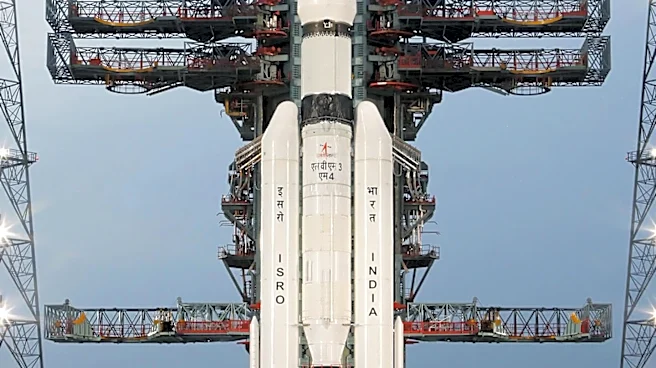
Skyroot Aerospace's Vikram-1 rocket is poised for India's first privately developed orbital launch. The rocket, assembled at the Satish Dhawan Space Centre, is set to launch within a window from July 12 to August 4. This mission, named Aagaman, marks
a significant milestone in India's space liberalization efforts, as it aims to demonstrate the capability of private companies to conduct orbital launches. The Vikram-1 will carry multiple payloads, including technology demonstrations and symbolic items, as part of its maiden flight.
Why It's Important?
The successful launch of Vikram-1 would position India as a leader in private space exploration, showcasing the potential for private companies to contribute to the country's space ambitions. This development could attract global satellite operators and boost India's space economy, which is targeted to grow significantly in the coming years. The mission also highlights the importance of regulatory frameworks to support private space activities, as India's Space Activities Bill remains unpassed. A successful launch could accelerate legislative efforts to provide a solid legal foundation for the industry.
What's Next?
Following the Vikram-1 launch, Skyroot plans additional test flights before commencing full commercial operations. The company aims to produce one orbital rocket per month, with future developments including the Vikram-II vehicle. The outcome of this mission could influence India's legislative process regarding space activities and impact the global perception of India's space capabilities. The success of Vikram-1 may also encourage further investment in India's burgeoning space sector.