








What's Happening?
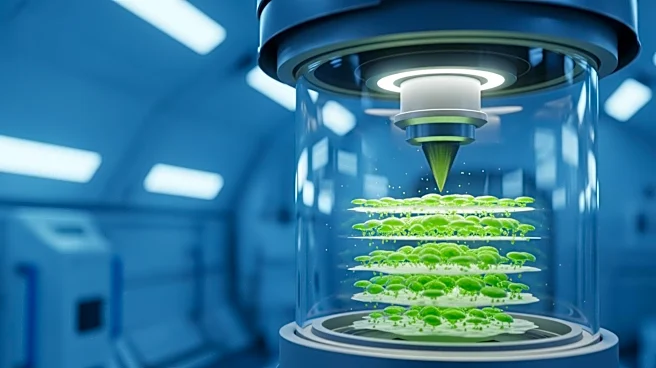
The crew aboard the International Space Station (ISS) has commenced a week of scientific activities focused on bioprinting human cartilage and harvesting plants. NASA flight engineer Jessica Meir and her colleagues are utilizing the Kibo laboratory module's
Life Science Glovebox to produce viable cartilage tissues, which could lead to on-demand implants for various health conditions. Concurrently, astronauts are harvesting alfalfa plants in the Columbus laboratory module to study plant growth in space, which is crucial for future long-duration missions. The crew is also conducting ultrasound vein scans to understand the effects of microgravity on human physiology.
Why It's Important?
The research being conducted on the ISS is vital for advancing human health and sustainability in space. Bioprinting cartilage in microgravity could revolutionize medical treatments by enabling the production of personalized implants. This technology has the potential to address a range of health issues, both in space and on Earth. Additionally, understanding plant growth in space is essential for developing sustainable food sources for future missions to the Moon and Mars. The ultrasound studies provide insights into the physiological changes astronauts experience in space, which is critical for ensuring their health and safety during extended missions.