
What's Happening?
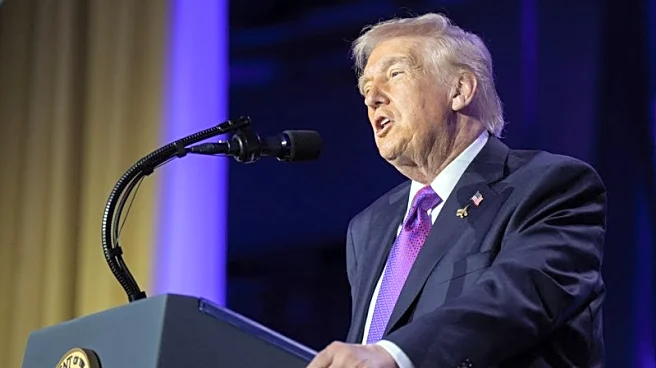
President Trump had promised to cut energy bills in half during his campaign, focusing on cheaper gasoline and electricity. While gasoline prices have decreased by about 20% due to global crude oil dynamics
and pressure on OPEC, electricity costs have continued to rise. Analysts, such as Helen Kou from BloombergNEF, report significant increases in wholesale power prices, particularly in regions like New York and New England. Factors contributing to rising electricity costs include an aging power grid, natural disasters, and increased natural gas prices. The administration's policies, such as ending federal tax credits for solar and wind projects and maintaining coal-powered plants, have not effectively addressed these issues.
Why It's Important?
The rising electricity costs have significant implications for American households and the broader energy market. Over 80 million Americans are reportedly struggling to pay their utility bills, highlighting the economic strain on consumers. The administration's focus on traditional energy sources and rollback of renewable energy incentives could hinder long-term cost reductions and sustainability efforts. The decision to keep coal plants operational and the lack of investment in grid improvements may exacerbate the situation, potentially leading to higher future costs and environmental concerns. The policy direction also affects the renewable energy sector, creating uncertainty and discouraging investment.
What's Next?
Looking forward, the administration's energy policies may continue to face criticism from renewable energy advocates and business groups. The potential for increased electricity costs could prompt calls for policy shifts towards more sustainable and cost-effective energy solutions. The administration's stance on AI data centers and their electricity usage could also become a focal point, as balancing industrial and consumer energy needs becomes increasingly important. Stakeholders may push for regulatory changes to encourage investment in renewable energy and grid modernization to mitigate rising costs and environmental impacts.
Beyond the Headlines
The broader implications of the administration's energy policies extend to environmental and economic dimensions. The rollback of efficiency standards and renewable energy incentives could slow progress towards climate goals and increase reliance on fossil fuels. This approach may also impact the U.S.'s position in the global energy market, as other countries advance in renewable energy technologies. The focus on traditional energy sources may lead to missed opportunities for innovation and economic growth in the renewable sector, affecting job creation and technological advancements.