





What's Happening?
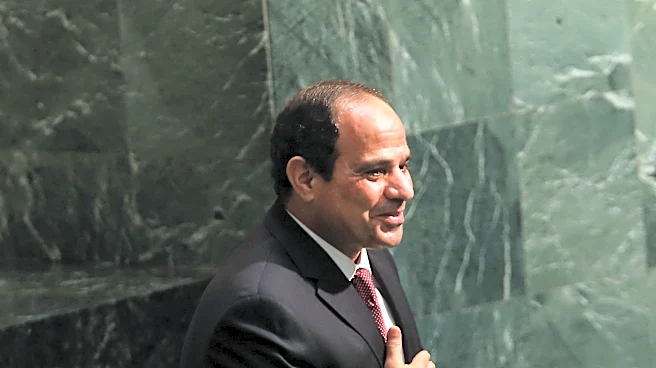
Egyptian President Abdel Fattah El-Sisi has expressed condolences and directed state agencies to provide medical care and swiftly investigate a recent train collision. The accident, which occurred between Kafr Ammar and Al-Raqqa stations, involved a train on the
Giza-Fayoum route hitting the rear of another on the Cairo-Aswan route. The Ministry of Health and Population reported that the death toll has risen to 7, with 112 injured. Emergency teams and cranes were dispatched to clear the site and restore services. The Egyptian National Railways Authority confirmed that several carriages derailed. President El-Sisi emphasized holding anyone found responsible for negligence accountable. This incident highlights ongoing issues within Egypt's railway network, which has a history of accidents due to outdated equipment and poor management.
Why It's Important?
This incident underscores the critical need for infrastructure modernization and safety improvements in Egypt's railway system. The high number of casualties and injuries reflects the potential human cost of neglecting such vital public services. For the U.S., while not directly impacted, stability in key regional allies like Egypt is important for broader geopolitical interests. Frequent accidents can erode public trust in government institutions and potentially lead to social unrest, which could have ripple effects on regional stability. Furthermore, U.S. companies involved in infrastructure development or transportation technology might see opportunities or increased scrutiny regarding safety standards if they operate in or consider entering such markets. The incident also serves as a stark reminder of the global challenges in maintaining and upgrading aging public infrastructure.
What's Next?
Following President El-Sisi's directives, a swift investigation into the train collision is expected to determine the exact causes and identify those responsible for negligence. The Egyptian Ministry of Health and Population will continue to provide medical care to the injured, with 45 patients already discharged and more expected to follow. The Egyptian National Railways Authority will focus on clearing the wreckage and restoring full train services on the affected routes. This incident may prompt renewed calls for significant investment and reforms in Egypt's railway infrastructure to prevent future accidents. Public and international pressure could lead to more stringent safety regulations and oversight, potentially involving international expertise or partnerships to upgrade the network.
Beyond the Headlines
The recurring nature of train accidents in Egypt, including the deadliest rail disaster in 2002, points to deeper systemic issues beyond individual negligence. These incidents often reflect a broader challenge of balancing rapid development with the maintenance and modernization of existing infrastructure, particularly in countries with large populations and limited resources. The emphasis on holding individuals accountable, while necessary, might also mask underlying problems such as insufficient funding for maintenance, corruption, or a lack of comprehensive safety protocols. Addressing these deeper issues would require a sustained commitment to institutional reform, significant financial investment, and potentially a cultural shift towards prioritizing safety and long-term planning over short-term gains. The human tragedy of such events also raises questions about social equity, as those most reliant on public transport are often the most vulnerable.