









What's Happening?
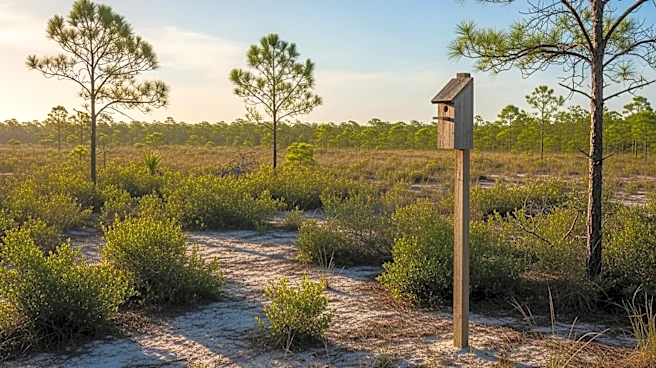
The Archbold Biological Research Station, located near Lake Placid, Florida, is dedicated to the study and preservation of various wildlife species, with a particular focus on the endangered Scrub Jay. Founded in 1941 by Richard Archbold, the station
spans 20,000 acres and includes the Buck Island Ranch. The facility is home to 550 of the world's 6,500 Scrub Jays, each meticulously monitored and banded to track their age, family, and territory. These birds are known for their territorial nature, defending their 25-acre parcels from other families. The station's director of avian ecology, Sahas Barve, notes the birds' curious nature, as they often interact with visitors. In addition to Scrub Jays, the station also monitors other species like the Gopher Tortoise and the Florida Grasshopper Sparrow.
Why It's Important?
The work at Archbold Biological Research Station is crucial for the conservation of endangered species like the Scrub Jay, which plays a significant role in the local ecosystem. By studying these birds and their habitats, researchers can develop strategies to protect them and ensure their survival. The station's efforts also contribute to broader environmental conservation goals, such as reducing carbon emissions. The acquisition of Buck Island Ranch, which supports 3,000 head of cattle, is an example of how managed land can contribute less carbon to the environment, challenging common perceptions about grazed land. This research and conservation work is vital for maintaining biodiversity and ecological balance in Florida and beyond.
What's Next?
The Archbold Biological Research Station will continue its research and conservation efforts, focusing on the Scrub Jay and other endangered species. The station's work is part of a larger series of studies aimed at understanding and mitigating the impacts of human activity on wildlife and their habitats. As the station expands its research, it may explore additional strategies for reducing carbon emissions and enhancing the sustainability of its operations. The findings from these studies could inform conservation policies and practices at both the state and national levels, potentially influencing how similar ecosystems are managed across the United States.
Beyond the Headlines
The research conducted at Archbold Biological Research Station highlights the complex interplay between conservation efforts and agricultural practices. The station's approach to managing Buck Island Ranch demonstrates that sustainable agricultural practices can coexist with conservation goals, offering a model for other regions. This balance is essential for addressing environmental challenges such as climate change and habitat loss. Additionally, the station's work underscores the importance of preserving biodiversity, as each species plays a unique role in its ecosystem. The insights gained from studying the Scrub Jay and other species can contribute to a deeper understanding of ecological dynamics and the development of more effective conservation strategies.