







What's Happening?
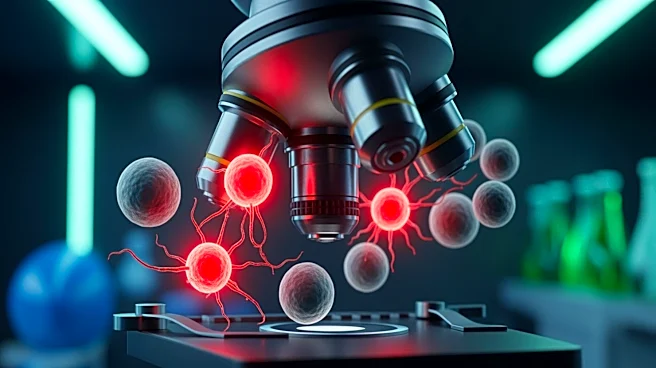
Researchers have developed an AI tool named SIDISH, which stands for semi-supervised iterative deep learning for identifying single-cell high-risk populations. This tool is designed to pinpoint small groups of cells that drive aggressive cancers, offering
a new approach to targeted therapy design. SIDISH successfully identified high-risk cells in pancreatic, breast, and lung cancers by analyzing tumor samples. The tool bridges the gap between single-cell data and patient outcomes, a challenge in cancer research. It can simulate how high-risk cells respond to gene modifications, aiding in the identification of promising drug targets.
Why It's Important?
SIDISH represents a significant advancement in cancer research by providing a method to identify and target the most dangerous cells within a tumor. This could lead to more effective treatments and improved patient survival rates. The tool's ability to simulate cellular responses to genetic changes could streamline drug development, reducing the time and cost associated with finding effective treatments. By focusing on high-risk cells, SIDISH may help in repurposing existing drugs and discovering new ones, potentially transforming the landscape of cancer treatment.
What's Next?
The research team plans to apply SIDISH to other complex diseases and collaborate with industry partners to refine the tool. While still in development, SIDISH has the potential to be integrated into clinical care, offering a new approach to personalized medicine. Future steps include further validation of the tool's effectiveness and exploring its application in other diseases where cell-to-cell differences are significant. The success of SIDISH could lead to broader adoption in the medical community, influencing how new drugs are discovered and existing ones are utilized.