



What's Happening?
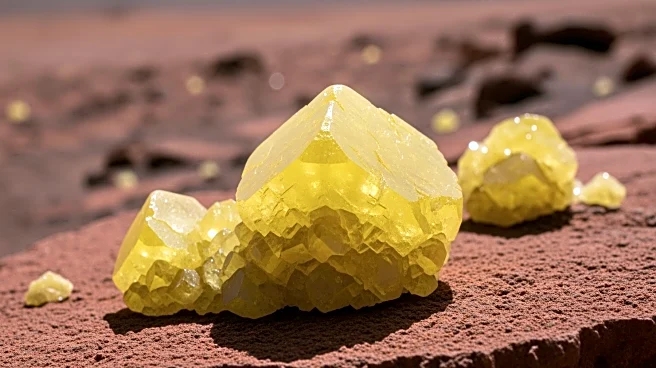
NASA's Curiosity rover has made an unexpected discovery on Mars by accidentally breaking a rock in the Gediz Vallis channel, revealing bright yellow crystals of elemental sulfur. This finding is significant as it challenges previous geological understandings
of the Red Planet. The sulfur crystals, found in a field of similar rocks, suggest specific environmental conditions not previously associated with this location. The discovery adds complexity to the narrative of Mars' geological history, indicating dynamic processes that may have shaped the planet's surface.
Why It's Important?
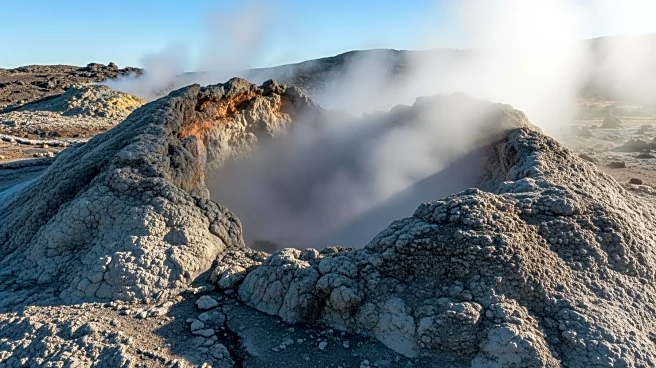
The discovery of elemental sulfur on Mars is significant for understanding the planet's past environments and geological processes. Sulfur is often associated with volcanic activity and hydrothermal systems on Earth, which are environments that can support microbial life. While the presence of sulfur does not indicate life, it provides clues about the chemical environments that existed on Mars. This finding could reshape scientific theories about Mars' history and its potential to have supported life in the past.
What's Next?
The Curiosity rover will continue to explore the area, collecting data and capturing images for further analysis. The mission will soon move to a new region known as 'boxwork,' where the rover will investigate geological structures that may have formed through subterranean processes. These studies will help scientists understand the environmental conditions on early Mars and assess the planet's habitability. The ongoing exploration will continue to challenge and refine our understanding of Mars' geological and environmental evolution.