







What's Happening?
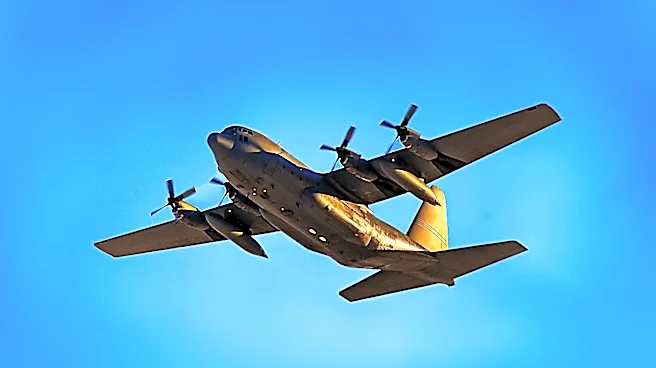
Lockheed Martin has delivered the first C-130J-30 Super Hercules aircraft to the U.S. Navy. This aircraft is slated for conversion into the E-130J Phoenix II, which will serve as the Navy's next-generation platform for its Take Charge and Move Out (TACAMO)
mission. The handover took place at Lockheed Martin’s facility in Marietta, Georgia. Following this delivery, the aircraft will be transferred to Northrop Grumman, which is responsible for integrating the specialized mission systems required for the E-130J Phoenix II. The C-130J-30 was chosen for its extensive range, endurance, payload capacity, and proven operational history. This model features advanced avionics, increased power, and improved fuel efficiency, all crucial for long-duration strategic communications operations. The delivery marks a significant step in restoring the Navy's TACAMO mission link to the Hercules platform, a role previously filled by the EC-130Q variant from 1963 to 1993.
Why It's Important?
The delivery of the C-130J-30 for the TACAMO program is vital for U.S. national security, specifically enhancing the Navy's airborne nuclear command-and-control communications capabilities. This upgrade ensures reliable and secure communication links for strategic operations, a critical component of the nation's defense infrastructure. The selection of the C-130J-30, a platform known for its reliability and adaptability, underscores the U.S. military's commitment to modernizing its strategic assets. The program's progression, involving both Lockheed Martin and Northrop Grumman, highlights the collaborative efforts within the U.S. defense industry to deliver advanced technological solutions. This investment in next-generation platforms ensures the U.S. maintains a robust and resilient strategic communications network, essential for deterrence and response in a complex global environment. The continuity of the Hercules platform in this role also leverages decades of operational experience, minimizing risks associated with entirely new systems.
What's Next?
Following the delivery, the C-130J-30 will be transferred to Northrop Grumman. Northrop Grumman will lead the integration of the specialized communications and other mission systems necessary to transform the aircraft into the operational E-130J Phoenix II. This conversion process will equip the aircraft for the Navy’s unique TACAMO requirements, including updated avionics, communications equipment, and survivability enhancements. U.S. Navy Captain Roger Davis, program manager for Airborne Strategic Command, Control and Communications (PMA-271), indicated that this acceptance marks a new phase, focusing on mission-systems integration. The E-130J Phoenix II is expected to build upon the legacy of its predecessor, the EC-130Q, incorporating modern technology to meet current and future strategic communication demands before it officially enters service.
Beyond the Headlines
The re-adoption of the Hercules platform for the TACAMO mission, after a hiatus since 1993, signifies a strategic decision to rely on proven, adaptable technology for critical national security functions. This move reflects a broader trend in defense procurement where reliability and established performance can outweigh the pursuit of entirely novel, unproven designs for core capabilities. The E-130J Phoenix II's role in airborne nuclear command-and-control communications highlights the enduring importance of resilient communication channels in an era of advanced cyber threats and electronic warfare. This program also underscores the continuous evolution of military aircraft, demonstrating how existing platforms can be modernized and repurposed to meet new operational challenges, thereby extending their service life and maximizing investment. The collaboration between major defense contractors like Lockheed Martin and Northrop Grumman on such a vital project also illustrates the intricate ecosystem of the U.S. defense industry.