





What's Happening?
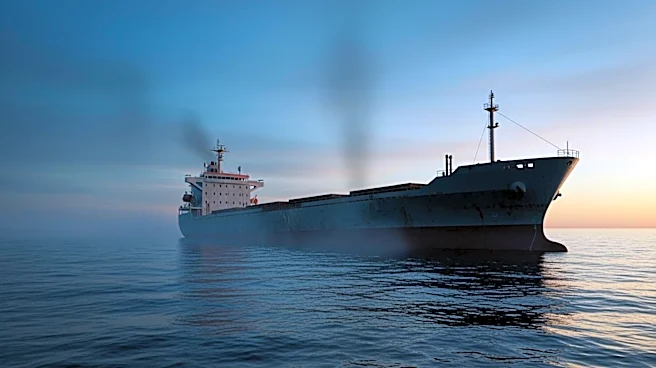
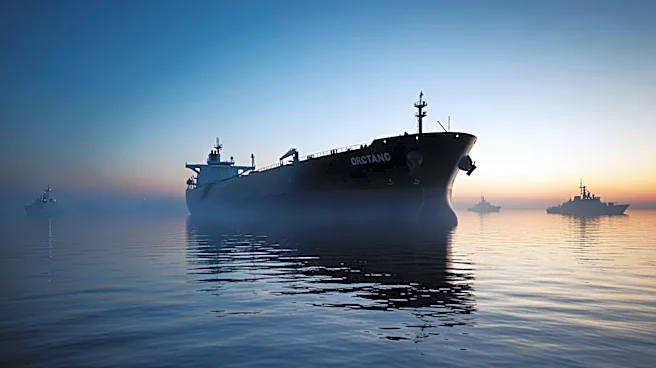
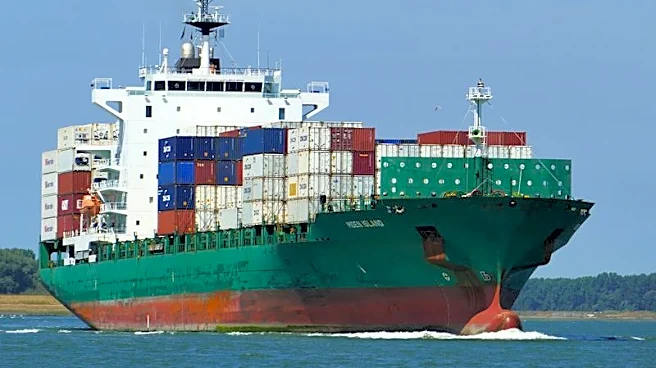
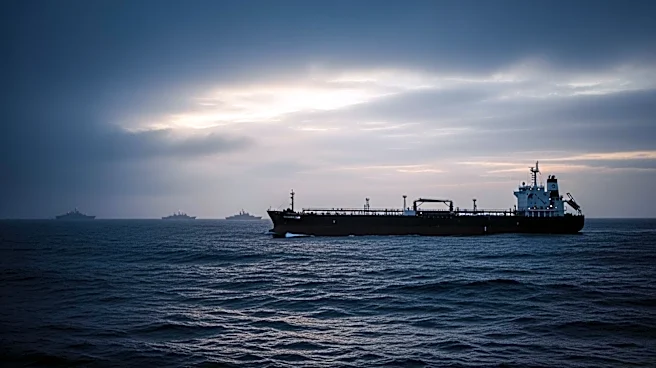
U.S. military forces have disabled two Iranian-flagged oil tankers attempting to cross a U.S. Navy blockade in the Strait of Hormuz. The tankers, M/T Sea Star III and M/T Sevda, were targeted by a U.S. Navy F/A-18 Super Hornet, which used precision munitions
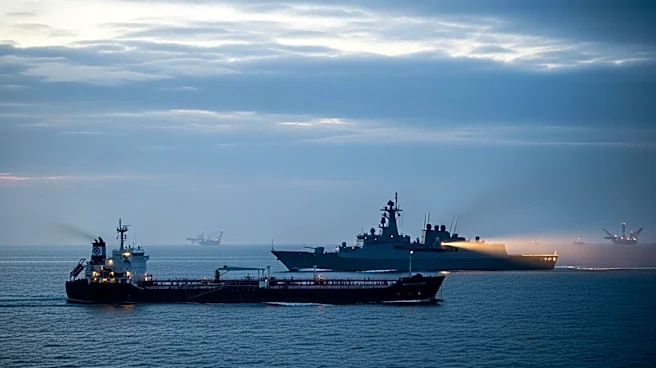
to disable the vessels before they could reach an Iranian port. This action is part of the U.S. enforcement of a blockade that began on April 12, aimed at preventing vessels from entering or leaving Iran. The blockade has resulted in the turning away of 50 commercial vessels. The recent confrontation follows a series of military engagements in the region, including the destruction of Iranian small boats and missiles by U.S. forces.
Why It's Important?
The U.S. blockade and subsequent military actions in the Strait of Hormuz are significant due to the strategic importance of the waterway, which is a critical route for global oil shipments. The blockade aims to exert pressure on Iran amid ongoing tensions and negotiations over its nuclear program. Disabling Iranian tankers highlights the U.S. commitment to enforcing sanctions and restricting Iran's oil exports, which could impact global oil markets and geopolitical relations. The situation underscores the fragile nature of U.S.-Iran relations and the potential for escalation in the region, affecting international trade and security.
What's Next?
The U.S. and Iran are reportedly in discussions over an agreement to end the conflict and address Iran's nuclear program. The continuation of military actions in the Strait of Hormuz could influence these negotiations and the broader geopolitical landscape. The U.S. may face diplomatic challenges in maintaining the blockade while avoiding further escalation. The international community will likely monitor the situation closely, as any disruption in the Strait could have significant economic and security implications.