




What's Happening?
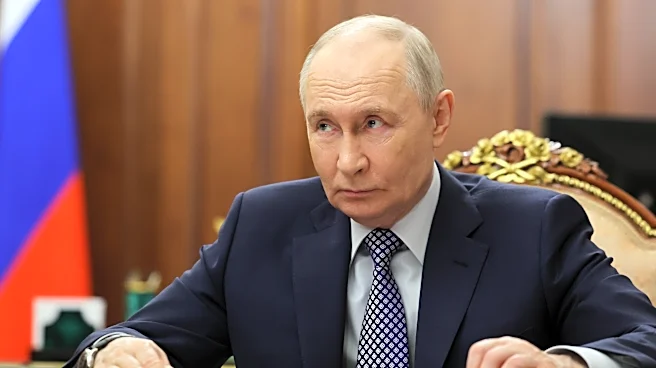
A temporary truce between Russia and Ukraine, intended to coincide with Orthodox Easter, quickly fell apart as both nations accused each other of violating the ceasefire. The truce, which was supposed to last 32 hours, was agreed upon by Russian President
Vladimir Putin and Ukrainian President Volodymyr Zelensky. However, reports indicate that Russia launched attacks on Ukraine, including a drone strike in Odesa that resulted in civilian casualties. Meanwhile, Russia accused Ukraine of attacking a gas station in the Kursk region, injuring civilians. Despite the breakdown of the ceasefire, both sides managed to exchange 175 prisoners of war.
Why It's Important?
The failure of the truce underscores the ongoing volatility and complexity of the conflict between Russia and Ukraine. The inability to maintain even a temporary ceasefire highlights the deep-seated mistrust and the challenges in achieving a lasting peace. This situation has significant implications for regional stability and international relations, particularly involving countries with vested interests in the conflict, such as the United States. The continued hostilities also pose humanitarian concerns, with civilian populations bearing the brunt of the violence.
What's Next?
The collapse of the truce may lead to intensified military engagements between the two countries. Diplomatic efforts may be further strained, complicating peace negotiations. The international community, including the United States, may need to reassess their strategies in mediating the conflict and providing humanitarian aid. The ongoing tensions could also influence global economic and security policies, particularly in Europe.