
What's Happening?
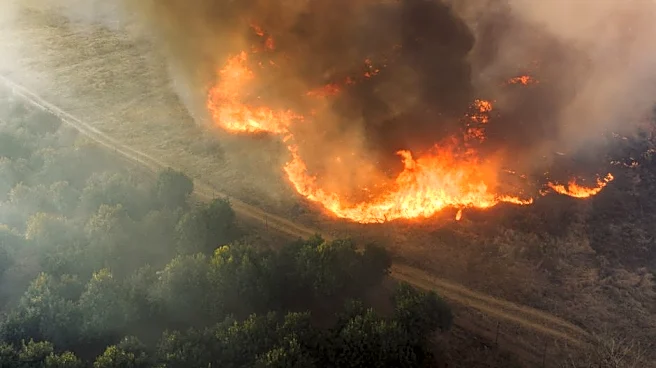
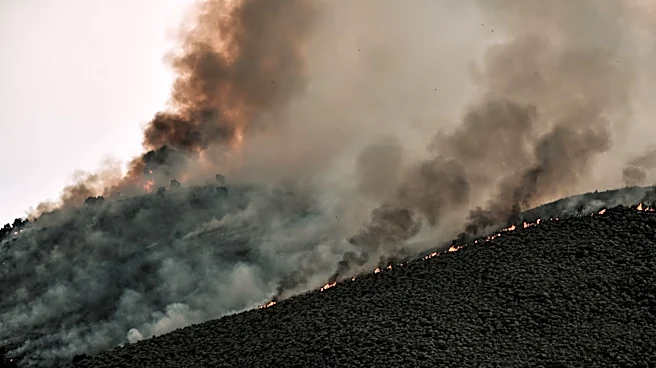
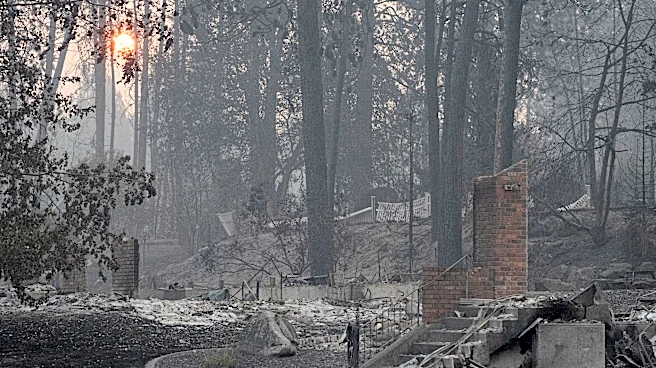
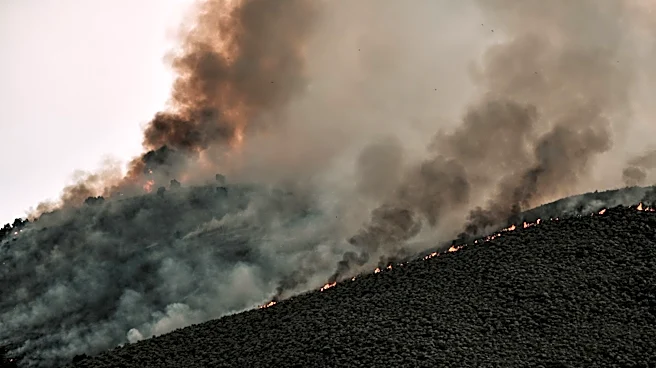
Wildfires in the Pacific Northwest have led to significant smoke drifting into Wyoming, causing poor air quality across the state. According to National Weather Service meteorologist Adam Dziewaltowski, the smoke originates primarily from fires in Washington
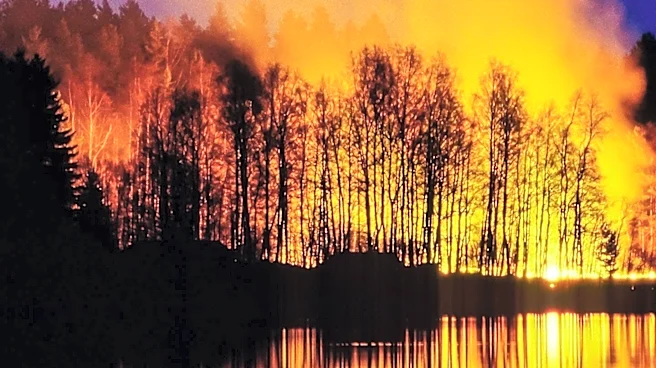
and Oregon, which have destroyed over 800 buildings and resulted in some of the worst air quality in Portland. The smoke has been funneled into Wyoming due to a cold front, which caused it to settle in the basins, exacerbated by the surrounding mountains that trap the smoke. This has resulted in vivid orange sunrises and sunsets, but also poor air quality, particularly during cooler times of the day. The Wyoming Department of Environmental Quality has issued air quality alerts, advising vulnerable groups to minimize outdoor activities.
Why It's Important?
The influx of smoke into Wyoming highlights the broader impact of wildfires beyond their immediate vicinity, affecting air quality and public health in distant regions. The situation underscores the interconnectedness of environmental issues and the need for comprehensive strategies to manage wildfire risks and air quality. The smoke poses health risks, particularly to older adults, young children, and individuals with respiratory issues, prompting public health advisories. This event also reflects the challenges in forecasting smoke patterns, which depend on fire behavior and weather conditions, complicating efforts to mitigate its effects.
What's Next?
As the fires continue to burn, air quality in Wyoming is expected to remain poor, with hazy skies likely persisting through the weekend. Authorities will continue to monitor the situation, providing updates and advisories to the public. Efforts to control the fires in the Pacific Northwest and manage air quality in affected areas will be ongoing. Residents in Wyoming and other impacted regions will need to stay informed about air quality conditions and take precautions to protect their health.