




What's Happening?
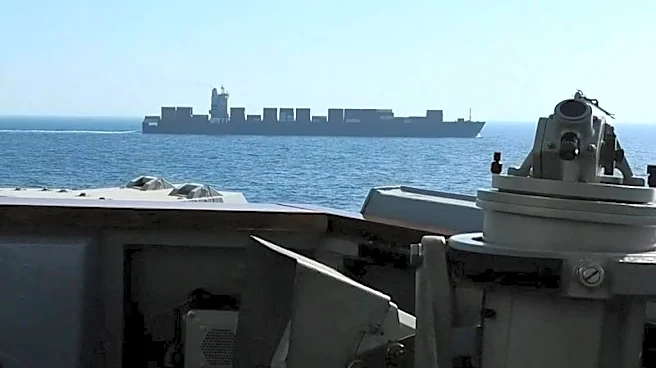
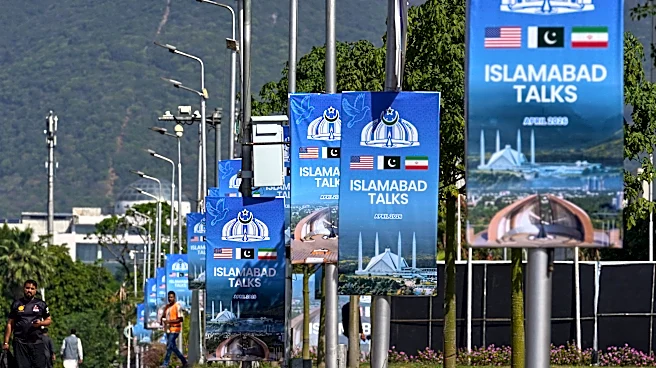
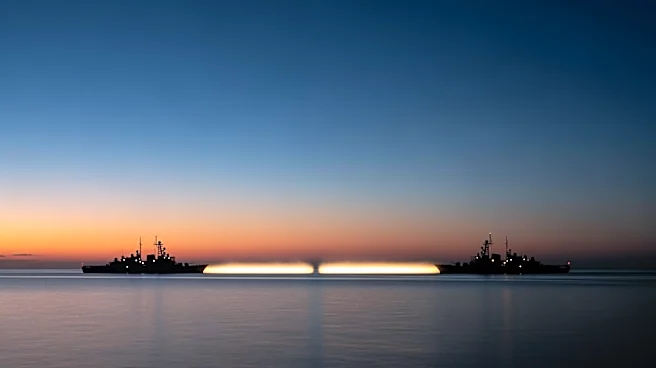
Following the failure of Islamabad talks led by Vice President JD Vance, President Trump has declared a full U.S. naval blockade against Iran. This move aims to restore freedom of navigation and counter what is described as Iran's 'maritime blackmail.'
The blockade is part of a broader strategy to apply economic pressure on Iran, which is already facing significant economic challenges, including a historic low in the value of its currency. The U.S. strategy draws parallels to past economic pressures that have led to significant political changes, such as the fall of communism.
Why It's Important?
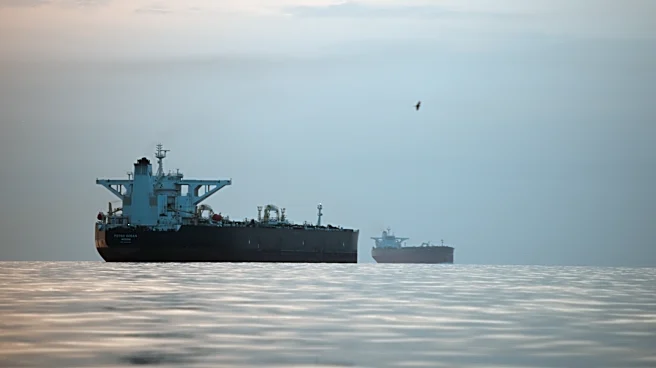
The U.S. blockade and sanctions represent a significant escalation in efforts to influence Iran's leadership and policies. By targeting Iran's oil exports, the U.S. aims to cripple the Iranian economy, potentially leading to internal unrest and weakening the regime's hold on power. This approach underscores the U.S. reliance on economic measures as a tool of foreign policy, reflecting a shift from military interventions to economic warfare. The outcome could have far-reaching implications for regional stability and global oil markets.
What's Next?
The effectiveness of the blockade and sanctions will depend on the international community's response and Iran's ability to adapt. Potential outcomes include increased diplomatic efforts to resolve tensions or further escalation if Iran retaliates. The situation could also influence global oil prices and impact international relations, particularly with countries that have economic ties to Iran. Monitoring the economic and political developments in Iran will be crucial in assessing the long-term impact of these measures.