







What's Happening?
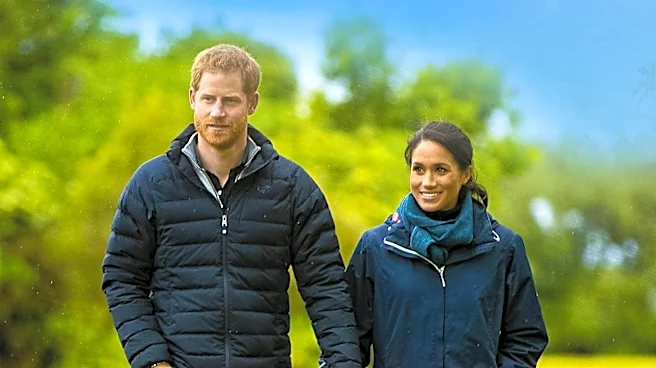
Prince Harry and Meghan Markle recently completed a four-day tour of Australia, which included both charitable and commercial engagements. The visit focused on mental health, community resilience, and support for veterans, alongside private meetings and special
projects. However, the tour has been criticized as a 'money-making exercise' by commentators, who argue that the couple's activities were more about personal gain than diplomatic efforts. The Sussexes have denied these claims, stating that their visit was privately funded and aimed at amplifying organizations with measurable impact. The tour included high-profile events such as Meghan's appearance at a 'girls’ weekend' retreat and Harry's speech at the InterEdge Summit. Despite the couple's assertions, the trip has been mired in controversy, particularly regarding whether Australian taxpayers contributed to its funding.
Why It's Important?
The controversy surrounding Prince Harry and Meghan Markle's tour highlights ongoing debates about the role and responsibilities of former royals who have stepped back from official duties. The criticism suggests a tension between public expectations of royal figures and their personal endeavors, especially when financial gain is perceived. This situation underscores the challenges faced by the Sussexes in balancing their public image with private interests. The tour's reception may influence future engagements and the couple's ability to maintain a positive public profile. Additionally, the scrutiny over taxpayer funding raises questions about the financial transparency and accountability of such visits, potentially impacting public opinion and policy regarding royal engagements.
What's Next?
As the Sussexes continue to navigate their roles outside the traditional royal framework, they may face increased pressure to clarify the nature and funding of their public engagements. Future tours and appearances will likely be closely monitored for similar controversies. The couple's response to these criticisms could shape their public relations strategy and influence their ongoing relationship with the media and the public. Additionally, the royal family may need to address the broader implications of such tours on the monarchy's image and its diplomatic functions.