





What's Happening?
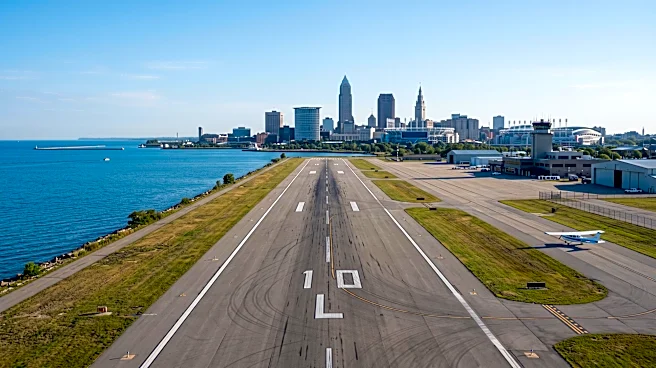
Cleveland City Council's Transportation and Mobility Committee recently discussed the future of Burke Lakefront Airport. Mayor Justin Bibb's administration has advocated for closing the airport to transform the 450-acre property into park space, promenades,
hotels, a youth sports complex, and an 18-hole golf course. This vision, if realized, could generate approximately $3 million per year in tax benefits and a one-time impact of about $800 million through development. Conversely, a coalition of airport experts, former commissioners, student pilots, and local proponents, including the Lakefront Airport Preservation Partnership (LAPP), argue for keeping Burke Lakefront Airport open. They contend that the airport is not a financial burden as often portrayed, citing a statewide economic output of $200 million, including contributions from the annual Air Show, two flight schools, and medevac tenants like Aitheras. LAPP also states that Burke handles around 50,000 operations annually, generates $1.3 million, and has been self-funded without federal grants since 2019. The city is exploring three potential pathways to closure: waiting for federal and state grant obligations to expire between 2034-2039, applying for closure through the Federal Aviation Administration (FAA) by proving a 'net benefit to aviation,' or seeking federal legislation to direct its closure.
Why It's Important?
The debate over Burke Lakefront Airport's future carries significant implications for Cleveland's economy, infrastructure, and public services. Proponents of keeping the airport open emphasize its critical role in healthcare, particularly for emergency organ transplant flights operated by companies like Aitheras, which states that relocating these operations to other regional airports would compromise patient care and could be a matter of life and death. The airport also supports aviation-related jobs and businesses, serves as a federally designated reliever airport, and contributes to tourism and special events like the Cleveland Air Show. Closing Burke could lead to increased congestion at Cleveland Hopkins International Airport and necessitate substantial infrastructure investments there. On the other hand, Mayor Bibb's administration views the airport as an underutilized public asset operating at a deficit, and its redevelopment could unlock significant economic opportunities and public access to the lakefront. The decision will impact local businesses, residents, and the broader regional aviation system, determining whether the land is prioritized for recreational and commercial development or its existing aviation and medical functions.
What's Next?
The Cleveland City Council's discussion on Burke Lakefront Airport was informational, and no formal decision or legislation regarding its future has been introduced. The next steps will likely depend on whether Mayor Bibb's administration formalizes a request to the FAA for closure and if concrete redevelopment proposals from entities like the North Coast Waterfront Development Corporation advance. The FAA is generally against closing airport operations, and senators Bernie Moreno and Jon Husted have expressed opposition to shutting down Burke for a lakefront park. A community recovery meeting is scheduled, where Mayor Bibb and his administration are expected to address residents' questions, though it is unclear if this will directly impact the airport debate. The ongoing dialogue will involve further testimony from stakeholders, potential studies on the economic and operational impacts of closure or upgrade, and continued engagement between the city administration, City Council, and various community and business groups. The outcome will shape the long-term development of Cleveland's lakefront and its regional aviation strategy.
Beyond the Headlines
Beyond the immediate economic and logistical considerations, the debate over Burke Lakefront Airport touches upon deeper questions of urban planning, public asset management, and community identity. The administration's push for redevelopment reflects a broader trend in many U.S. cities to reimagine underutilized industrial or infrastructural spaces for public enjoyment and economic revitalization. This often involves balancing the interests of existing industries and services with the potential for new revenue streams and improved quality of life for residents. The argument for preserving the airport highlights the often-overlooked value of specialized infrastructure, such as its role in critical medical transport, which may not be easily quantifiable in traditional economic development models. The discussion also brings to light the complexities of federal and local governance, as the FAA's stance on airport closures and the potential need for federal legislation underscore the multi-layered decision-making process involved. The outcome could set a precedent for how Cleveland, and potentially other cities, approach the transformation of legacy infrastructure in an evolving urban landscape.