





What's Happening?
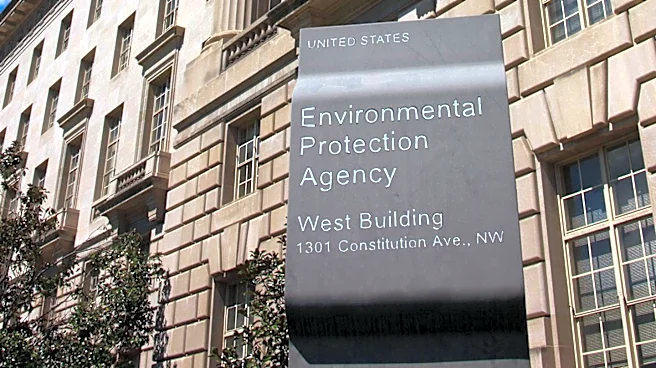
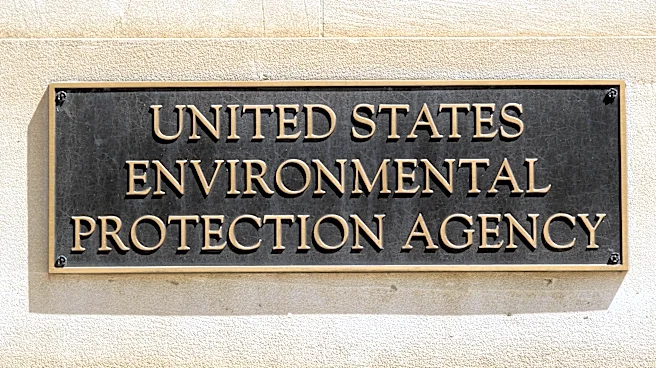
The U.S. Environmental Protection Agency (EPA) has significantly scaled back its implementation of the National Environmental Policy Act (NEPA) and its cross-agency environmental oversight. This reduction in activity is attributed to both policy decisions
and a decrease in agency staffing levels, which fell by over 13% in 2025. Historically, the EPA provided crucial comments on other agencies' environmental decisions, identifying unforeseen impacts and suggesting mitigation measures. However, recent guidance from EPA Deputy Administrator David Fotouhi in June 2026 asserts that the EPA has 'broad discretion' in commenting or choosing not to comment, emphasizing that the primary responsibility for environmental review rests with the other agencies. Consequently, the EPA has, in many instances, ceased issuing meaningful substantive comments on other federal agencies' environmental decisions, even responding with 'no comments' to significant projects like a draft EIS for a uranium enrichment facility and a programmatic EIS for mining activity in national forests.
Why It's Important?
The EPA's reduced engagement in environmental oversight and NEPA implementation carries substantial implications for environmental protection in the United States. The agency's historical role as a 'meaningful check' on potential environmental impacts has been vital for ensuring that federal actions adequately consider and address ecological consequences. Without the EPA's detailed input, there is an increased risk that federal projects, including those related to energy and infrastructure, may proceed with insufficient environmental safeguards. This shift could weaken the legal defensibility of environmental decisions and make it harder to challenge projects with potentially adverse impacts. The decrease in staffing further exacerbates these concerns, suggesting a reduced capacity within the EPA to fulfill its mandate of enforcing environmental protection standards consistent with national environmental goals.
What's Next?
The EPA's current trajectory suggests a continued emphasis on streamlining NEPA processes and an 'exemption-first approach' to environmental reviews. This approach is likely to face ongoing scrutiny and potential legal challenges from environmental organizations and concerned states, who argue that such changes undermine NEPA's purpose of ensuring a 'hard look' at environmental impacts. The interpretation of the EPA's 'broad discretion' in commenting on other agencies' actions will be a key area of focus. The long-term consequences could include a more fragmented and less consistent application of environmental protection standards across federal agencies, potentially leading to increased environmental degradation and public health risks. The debate over the balance between project efficiency and comprehensive environmental review is expected to intensify.
Beyond the Headlines
The EPA's pullback from its traditional oversight role reflects a broader ideological shift regarding environmental regulation, potentially influenced by recent Supreme Court decisions and administrative priorities. This development raises fundamental questions about the balance of power and responsibility among federal agencies in protecting the environment. The move towards less stringent environmental reviews could be seen as prioritizing economic development and project acceleration over ecological preservation. This approach might also lead to a greater burden on state and local governments to monitor and mitigate environmental impacts, potentially creating inconsistencies in environmental quality across different regions. The long-term implications could include a redefinition of the EPA's role and authority, potentially altering the landscape of environmental governance in the U.S. for decades to come.