





What's Happening?
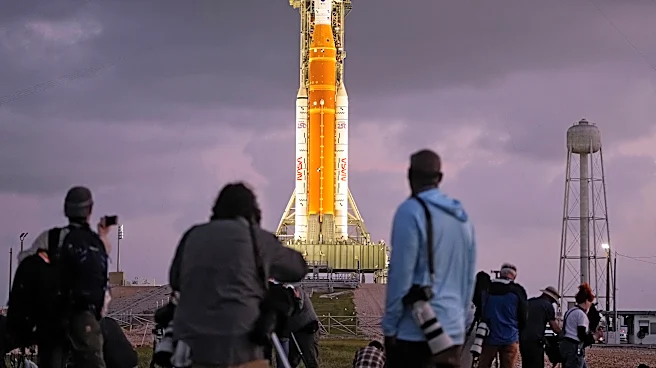
NASA has launched the Artemis II mission, marking the first lunar flyby since Apollo 17 in 1972. The mission, which began on April 1, 2026, from Kennedy Space Center's Launch Complex 39B, involves a crew of four astronauts: Reid Wiseman, Victor Glover,
Christina Koch, and Jeremy Hansen from the Canadian Space Agency. The mission aims to test the Orion spacecraft's systems, including life support, propulsion, and navigation, in preparation for future lunar landings. The Space Launch System (SLS) rocket, which carried the Orion spacecraft, is a significant component of NASA's plan to establish a sustained presence on the Moon.
Why It's Important?
The Artemis II mission is crucial for NASA's long-term goals of lunar exploration and establishing a Moon base. By successfully executing a lunar flyby, NASA is validating the systems necessary for future missions that will involve landing on the Moon. This mission is a stepping stone towards the Artemis IV mission, which aims to land astronauts on the lunar surface by 2028. The success of Artemis II could bolster international collaboration in space exploration and enhance technological advancements in space travel.
What's Next?
Following the Artemis II mission, NASA plans to continue its Artemis program with subsequent missions aimed at landing astronauts on the Moon and establishing a lunar base. The next major milestone is the Artemis IV mission, scheduled for 2028, which will involve a crewed landing on the Moon. NASA's efforts are part of a broader push to maintain a sustained human presence on the Moon, which could lead to further exploration of Mars and beyond.