


What's Happening?
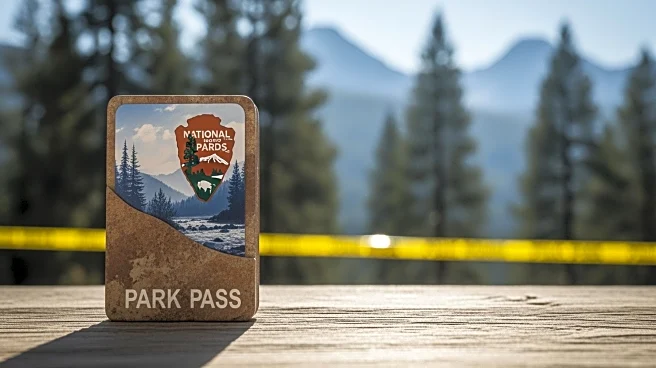
The National Park Service has updated its policy regarding the defacement of the 2026 America the Beautiful pass, which features images of Presidents George Washington and Donald Trump. Traditionally, these passes have showcased natural landscapes or wildlife,
selected through a public photo contest. The inclusion of President Trump's image has sparked controversy, leading to a sticker protest and a lawsuit by the Center for Biological Diversity. The lawsuit argues that the pass design violates a federal requirement to display a winning photograph from a national parks photo contest, which for 2026 was an image of Glacier National Park. The National Park Service has clarified that passes may be voided if altered, including the application of stickers, which has become a popular form of protest against the current design.
Why It's Important?
This controversy highlights the tension between political expression and the traditional neutrality of public lands. The backlash against the pass design reflects broader societal divisions and the desire to keep politics out of national parks. The lawsuit and sticker campaign underscore the public's commitment to preserving the integrity of these spaces. The situation also raises questions about the use of government materials for political branding, which could set a precedent for future administrations. The outcome of this legal challenge could influence how public lands are represented and managed, affecting both conservation efforts and public perception.
What's Next?
The lawsuit filed by the Center for Biological Diversity seeks to have the current pass design replaced with the original contest-winning image and to prevent future passes from featuring a president's face. The case will likely proceed through the federal court system, with potential implications for how national park passes are designed in the future. Meanwhile, the sticker protest continues to gain traction, with park visitors and conservationists advocating for a return to the traditional, nature-focused imagery. The National Park Service will need to navigate these challenges while maintaining its policies and addressing public concerns.