






What's Happening?
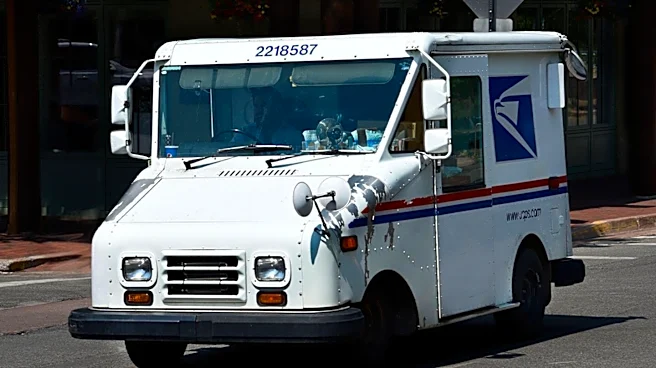
The U.S. Postal Service (USPS) is experiencing significant financial difficulties, reportedly losing billions of dollars annually and operating without tax dollars for its operations. Leadership has indicated to Congress that without a new agreement,
the closure of thousands of post offices is a possibility after the 2027 holidays. In response to this, a bipartisan bill was introduced in the Senate in August to allow communities to lease postal property for housing development. The USPS owns over 8,500 properties and leases more than 25,000 others, with analyses suggesting that postal parcels could accommodate up to 237,000 homes nationwide, including 117,000 in areas with high housing demand. This initiative aims to address both the USPS's financial woes and the national housing crisis by repurposing underutilized postal land.
Why It's Important?
This development is significant for both the financial stability of the USPS and the affordable housing crisis in the U.S. The potential closure of post offices could severely impact communities, particularly those in rural areas, by reducing access to essential services. Conversely, repurposing postal properties for housing could provide a substantial boost to affordable housing initiatives, offering new homes in areas often well-served by public transit and existing infrastructure. The proposed bill, the Delivering Americans Affordable Homes Act, would require at least 20 percent of units developed on leased postal land to be affordable, potentially benefiting low-income individuals and those experiencing homelessness. This approach could transform how public land is utilized to address pressing societal needs.
What's Next?
The proposed Delivering Americans Affordable Homes Act, introduced by Senators John Curtis and Chris Van Hollen, is currently in the legislative process. If passed, it would enable long-term leases of postal properties for housing, with a mandate for affordable units. Housing and homelessness practitioners are urged to engage in this conversation, particularly regarding the depth of affordability and the potential for supportive housing within these developments. Communities facing potential post office closures are encouraged to appeal these decisions, citing the importance of these facilities. The ongoing debate will likely focus on the specifics of property sales versus leases, the percentage of affordable units, and how to ensure that these new housing opportunities genuinely serve those most in need.
Beyond the Headlines
Beyond the immediate financial and housing implications, this situation highlights a broader reevaluation of public assets and their potential to serve multiple community needs. The USPS, often seen primarily as a mail delivery service, is also a significant landowner and a critical community hub. The discussion around repurposing its properties for housing could set a precedent for how other underutilized public lands are viewed and developed. It also brings to light the often-overlooked role of post offices in supporting vulnerable populations, such as those experiencing homelessness, by providing access to mail and, potentially, other essential services like banking. This initiative could foster innovative partnerships between federal agencies, local governments, and housing developers to address complex urban and social challenges.