
What's Happening?
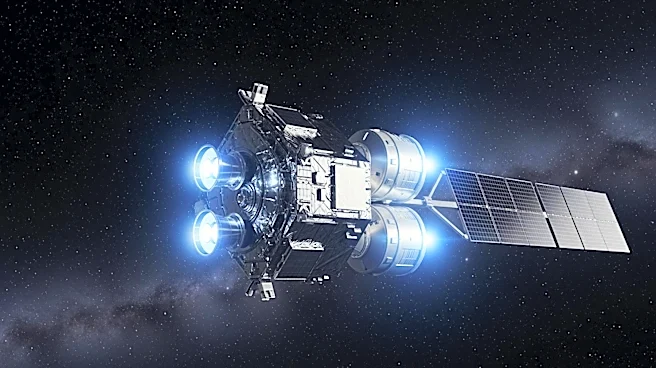
The White House has issued a directive to the Pentagon and NASA to launch nuclear reactors into orbit by 2028 and to the Moon by 2030. This initiative aims to provide sustained electricity, heating, and propulsion
for future space missions. The policy memo calls for a dual design competition to produce low- to mid-power space reactors for use in orbit and on the lunar surface. The Pentagon is tasked with briefing the White House on relevant use-cases and payloads within 90 days. The initiative is part of a broader strategy to ensure U.S. space superiority, as outlined in President Trump's executive order.
Why It's Important?
The deployment of nuclear reactors in space is significant for U.S. space exploration, commerce, and defense. It provides a reliable energy source for critical military missions, including missile warning and strategic communications. The initiative positions the U.S. as a leader in space nuclear power, potentially unlocking new applications in space exploration and defense. However, concerns have been raised about the security risks of microreactors on U.S. bases, which could be targeted by adversaries.
What's Next?
The Pentagon and NASA will collaborate on design and development efforts to accelerate the deployment of space nuclear power systems. The Defense Department is working to field nuclear microreactors on military bases, with plans to break ground on a microreactor by 2027. The Air Force has selected locations for pilot programs to test the operational benefits of reactors. The timeline for moon-based reactors is ambitious, with experts noting the challenges of demonstrating microreactors on Earth and in space.