





What's Happening?
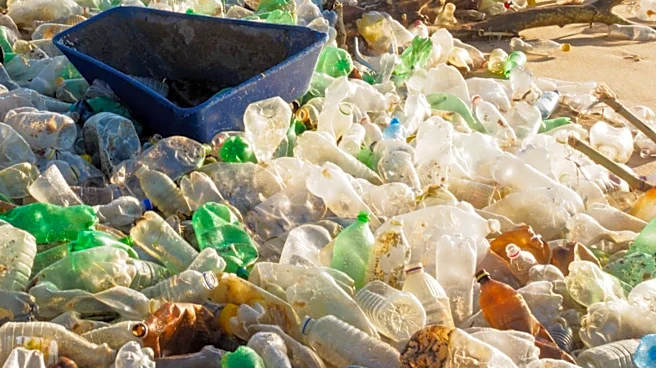
The Boomerang Alliance, a coalition of 56 non-governmental organizations, is urging the Commonwealth government to translate its support for high-ambition Global Plastics Treaty targets into stronger domestic action. This call comes amidst concerns over the Australian
government's recent 'backflip' on packaging and recycling reform, which the Alliance claims has led to a 'growing disaster' for the recycling system. According to the Boomerang Alliance, this policy reversal has removed crucial regulatory certainty needed by investors to support and grow recycling initiatives. The Alliance highlights that several plastic recycling plants are facing closure, and half a dozen recyclers have gone into administration recently. They argue that the current approach, using the 2005 National Environment Protection Measure, has resulted in only 14% of plastic being recycled, despite a consensus among state governments, industry, and environmental groups for a new producer responsibility law.
Why It's Important?
The situation described by the Boomerang Alliance underscores the critical link between national policy and the effectiveness of global environmental commitments. For the U.S., this highlights the importance of robust domestic regulatory frameworks to support international agreements on issues like plastic pollution. A lack of consistent policy can deter investment in recycling infrastructure and innovation, hindering progress towards a circular economy. The failure of recycling initiatives, as seen in Australia, can lead to increased landfill waste, environmental degradation, and a loss of public trust in recycling systems. This scenario could also impact U.S. businesses involved in international trade, as differing national standards for plastic waste management could create complexities and compliance challenges.
What's Next?
The Boomerang Alliance predicts growing community outrage and plans to expand its campaign to pressure the government to reverse its policy 'backflip' and engage in negotiations for stronger recycling reforms. Key elements of packaging reform advocated by the Alliance include producer responsibility for products across their entire life cycle, mandatory targets for design, recovery, and recycled content, and the establishment of a multi-stakeholder governance model. The outcome of these advocacy efforts could influence future policy decisions, potentially leading to the implementation of more stringent regulations for plastic waste management. This could also serve as a case study for other nations, including the U.S., on the consequences of policy inconsistencies in environmental protection.
Beyond the Headlines
The 'recycling shambles' described by the Boomerang Alliance points to a deeper issue of political will and the challenges of implementing effective environmental policies. The reliance on outdated measures and the perceived 'waste of grants with taxpayer money' highlight the economic inefficiencies and public distrust that can arise from inadequate policy. This situation also brings to light the tension between economic development and environmental protection, particularly when short-term economic considerations may override long-term sustainability goals. The call for producer responsibility reflects a growing global movement to shift the burden of waste management from consumers and municipalities to the manufacturers of products, encouraging more sustainable design and material choices from the outset.