
What's Happening?
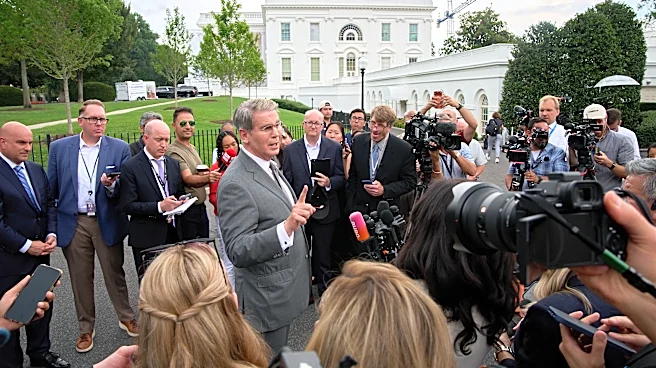
Treasury Secretary Scott Bessent stated on Thursday that there is a 'very good chance' the U.S. budget deficit under President Trump has reached its peak. This announcement came during an exclusive interview
with CNBC, following the Treasury Department's recent decision to double the size of its long-duration debt buybacks. The U.S. budget deficit for July topped $432 billion, marking its highest level in over half a decade. The fiscal year-to-date gap has climbed to nearly $1.8 trillion, surpassing the figure from the same period last year. The nation's total government debt has also reached a new record, exceeding $40 trillion, having more than doubled over the past decade. Secretary Bessent, along with President Trump and Office of Management and Budget Director Russell Vought, are actively working on fiscal consolidation measures. These efforts are projected to save several hundreds of billions of dollars. Despite the White House's previous marketing of broad tariffs as a revenue driver to reduce national debt, these levies have faced legal challenges, including a Supreme Court decision to strike many of them down.
Why It's Important?
The potential peaking of the U.S. budget deficit, as indicated by Treasury Secretary Bessent, carries significant implications for the nation's economic stability and fiscal policy. A declining deficit could alleviate concerns about the country's long-term financial health, potentially leading to greater investor confidence and a more stable economic outlook. The record-high national debt of over $40 trillion has been a source of worry, and any indication of fiscal consolidation is crucial for managing this burden. The administration's focus on fiscal consolidation measures, including potential savings of hundreds of billions of dollars, suggests a concerted effort to address the growing debt. This could involve re-evaluating spending priorities, optimizing government operations, or exploring new revenue streams. The challenges faced by the administration's tariff policies highlight the complexities of implementing revenue-generating strategies and the need for legally sound and sustainable approaches. The ability to manage the deficit and national debt effectively will influence interest rates, inflation, and the overall cost of living for American citizens, making this a critical area of focus for policymakers and the public alike.
What's Next?
Following Secretary Bessent's statement, the focus will be on the implementation and effectiveness of the fiscal consolidation measures currently being developed by the Trump administration. The public and financial markets will closely monitor future budget reports to see if the deficit indeed begins to trend downwards. The administration's efforts to identify and realize hundreds of billions in savings will be a key indicator of their commitment to fiscal responsibility. Additionally, the ongoing debate surrounding tariffs and their role in revenue generation will continue. While Secretary Bessent expects tariff revenue for the current year to match 2025 levels despite legal challenges, the long-term viability and impact of these policies will remain under scrutiny. The administration may explore alternative or supplementary revenue strategies that are less susceptible to legal roadblocks. The success of these initiatives will be crucial for demonstrating progress in managing the national debt and ensuring the long-term financial health of the U.S. economy. Future economic forecasts and policy decisions will likely be heavily influenced by the trajectory of the budget deficit.
Beyond the Headlines
Beyond the immediate financial figures, the discussion around the U.S. budget deficit and national debt touches upon deeper issues of intergenerational equity and the sustainability of current fiscal policies. A continuously growing national debt can place a significant burden on future generations, potentially limiting their economic opportunities and increasing their tax obligations. Secretary Bessent's assertion that 'there's nothing magic about the 40-trillion number' and that the U.S. 'can grow our way out of that' reflects a perspective that economic growth can naturally mitigate debt concerns. However, this approach relies heavily on sustained and robust economic expansion, which is not always guaranteed. The ongoing efforts to consolidate fiscal spending also highlight the political challenges of balancing public services with financial prudence. Decisions made today regarding the budget deficit will have lasting impacts on the nation's economic structure, its global financial standing, and the quality of life for its citizens. This situation underscores the need for a comprehensive and bipartisan approach to fiscal policy that prioritizes long-term stability over short-term political gains.