

What's Happening?
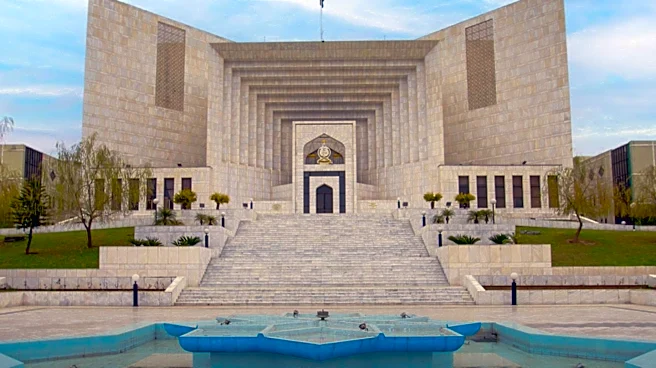
The U.S. Supreme Court is set to hear the case of Suncor Energy (USA), Inc. v. County Commissioners of Boulder County, which addresses whether federal law preempts state law claims against fossil fuel companies for climate change-related damages. This
case is significant as it could influence the legal landscape of climate litigation and federal preemption. The case has attracted numerous amicus briefs, with parties divided on the issue of preemption. The outcome could have substantial financial implications and potentially alter the approach to climate-related lawsuits in the U.S.
Why It's Important?
The Supreme Court's decision in this case could set a precedent for how climate change-related lawsuits are handled in the U.S. If the court rules in favor of preemption, it could limit the ability of states to pursue claims against fossil fuel companies, potentially shielding these companies from liability for climate-related damages. This could impact the broader strategy of using litigation as a tool to hold companies accountable for their contributions to climate change. The case also highlights the ongoing debate over the role of federal versus state law in addressing environmental issues.
What's Next?
The Supreme Court's ruling will be closely watched by environmental groups, legal experts, and the fossil fuel industry. A decision is expected to influence future climate litigation and could prompt legislative action to clarify the scope of federal preemption in environmental cases. Depending on the outcome, there may be increased pressure on Congress to address climate change through federal legislation. The case also underscores the importance of judicial interpretation in shaping environmental policy and the legal responsibilities of corporations.