







What's Happening?
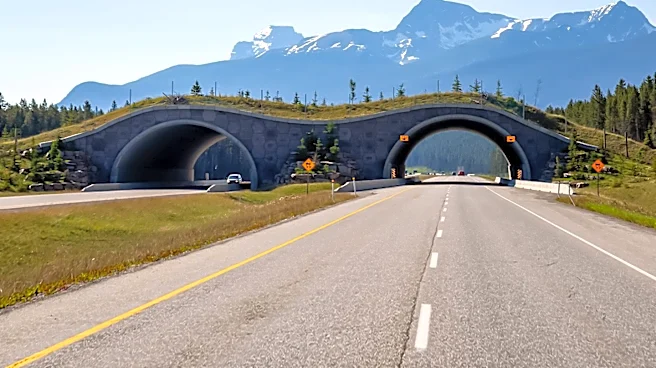
Efforts to build wildlife crossings in the U.S. are gaining momentum as a means to protect endangered species like the Florida panther from vehicle strikes and habitat fragmentation. These crossings, which include overpasses and underpasses, are designed
to allow animals to safely traverse busy highways, thereby reconnecting fragmented habitats. The initiative is part of a broader global movement to make road networks safer for wildlife. In Colorado, for example, the construction of wildlife crossings along Interstate 25 has significantly reduced roadkill and reconnected large areas of habitat. The project, which includes a massive overpass near Greenland, Colorado, is expected to reduce wildlife collisions by 90% and reunite 40,000 acres of habitat. Conservationists and governments are increasingly investing in these structures to preserve biodiversity and enhance public safety.
Why It's Important?
Wildlife crossings are crucial for the survival of many endangered species whose habitats are fragmented by roads. Vehicle collisions with large animals not only threaten wildlife but also pose significant risks to human safety and incur substantial economic costs. In the U.S., such collisions cost the economy over $10 billion annually. By reducing these incidents, wildlife crossings can save lives and reduce economic losses. Moreover, they play a vital role in maintaining ecological corridors, which are essential for the movement and genetic diversity of wildlife populations. The success of these projects could serve as a model for other regions, promoting biodiversity conservation and sustainable infrastructure development.
What's Next?
The continued expansion of wildlife crossings in the U.S. will depend on sustained funding and political support. The federal Wildlife Crossings Pilot Program, which provides matching grants to states, is a key driver of these projects. However, the program's current funding is insufficient to meet the high demand for crossings. Legislative efforts are underway to secure more funding and make the program permanent. If successful, these efforts could lead to a significant increase in the number of wildlife crossings, further reducing roadkill and enhancing habitat connectivity across the country.