
What's Happening?
Tennessee's recent redistricting has divided the state into three new congressional districts, significantly impacting representation for residents, particularly in majority-Black Memphis and the suburbs
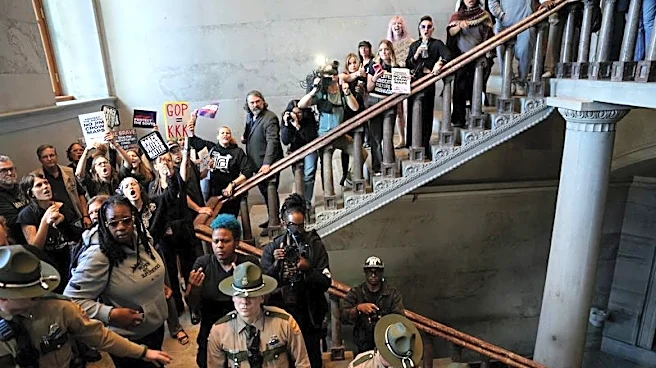
of Nashville. The changes have sparked a debate about the implications for local representation and the potential dilution of minority voices. The new map sees Memphis, a historically significant city, split into different districts, raising concerns among local leaders like J. Lawrence Turner, pastor and head of the Black Clergy Collaborative of Memphis. Turner argues that the redistricting serves a national agenda that does not reflect local realities. Meanwhile, State Senator Brent Taylor supports the changes, suggesting they better represent Tennessee's diverse interests. The redistricting has also led to political tensions, with Republicans and Democrats clashing over the motivations and consequences of the new boundaries.
Why It's Important?
The redistricting in Tennessee is significant as it highlights ongoing national debates over gerrymandering and representation. The changes could potentially weaken the political influence of minority communities in Memphis, a concern echoed by local Democrats who view the move as racially motivated. On the other hand, Republicans argue that the new districts will lead to better representation of Tennessee's diverse population. This redistricting could influence future elections by altering the political landscape, potentially affecting which party holds power in the state. The situation underscores broader issues of race and representation in American politics, with potential implications for policy decisions and resource allocation in affected areas.
What's Next?
As the candidate qualifying period concludes, several legal challenges are expected to arise, questioning the legality of the new district boundaries under the Voting Rights Act. These challenges could lead to court battles that may alter or delay the implementation of the new map. Political parties and civil rights groups are likely to continue their advocacy, either supporting or opposing the changes, depending on their perceived impact on voter representation. The outcome of these legal proceedings could set precedents for future redistricting efforts across the United States.
Beyond the Headlines
The redistricting in Tennessee raises deeper questions about the role of race in political representation and the ethical considerations of gerrymandering. The changes could lead to long-term shifts in political power dynamics, affecting how communities are represented at the national level. Additionally, the redistricting process highlights the challenges of balancing diverse interests within a state, particularly in areas with significant racial and economic disparities. The situation may prompt discussions on the need for reforms in how electoral districts are drawn to ensure fair and equitable representation for all citizens.