





What's Happening?
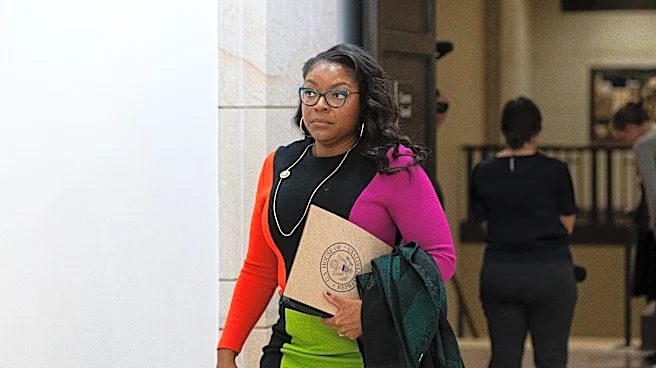
U.S. Representative Lauren Underwood, who represents Illinois' 14th Congressional District, has been elected as the vice chair of the House Democratic Caucus. This election makes her the highest-ranking Black woman in congressional history, a significant
milestone not seen since the late Rep. Shirley Chisholm in 1977. Underwood secured the position by defeating Representative Sara Jacobs of California in a 143 to 118 vote. In her new role, Underwood will be part of the party's senior leadership team, helping to organize meetings, communicate party priorities, and coordinate lawmakers on major legislative issues. She was first elected to Congress in 2018, becoming the youngest Black woman ever elected to Congress at 32. Before her political career, Underwood worked as a registered nurse and served as a senior adviser at the U.S. Department of Health and Human Services during the Obama administration. Her legislative focus has consistently been on healthcare, particularly maternal health, and she co-founded the Black Maternal Health Caucus.
Why It's Important?
Representative Underwood's election to vice chair of the House Democratic Caucus holds significant importance for several reasons. Firstly, it marks a historic advancement for Black women in U.S. political leadership, providing a prominent platform for diverse perspectives within the Democratic Party's decision-making processes. Her background as a registered nurse and her prior experience at the U.S. Department of Health and Human Services mean that healthcare policy, especially maternal health, is likely to receive increased attention and informed advocacy within the caucus's agenda. This is particularly crucial given her work with the Black Maternal Health Caucus, addressing disparities in maternal health outcomes. Her position will allow her to influence legislative priorities, shape internal discussions, and coordinate communication among Democratic lawmakers, potentially leading to more robust policy initiatives in areas she champions. This elevation also signals a broader trend within the Democratic Party to promote diverse leadership, reflecting the changing demographics and priorities of its base.
What's Next?
Representative Underwood is expected to assume her new leadership responsibilities when the next Congress convenes in January 2027. As vice chair, she will play a crucial role in shaping the House Democratic Caucus's agenda, strategy, and messaging. Her position will involve working closely with the caucus chair to set priorities, preside over weekly meetings, and guide discussions among Democratic lawmakers. Given her strong background in healthcare, particularly maternal health, it is anticipated that she will continue to advocate for related legislation and policy changes. Her elevation also positions her to influence which oversight hearings take priority and which bills advance, especially concerning healthcare and public health. The Democratic Party's leadership, including the potential first Black Speaker of the House, Hakeem Jeffries, will be organizing their team following the recent midterm elections, and Underwood's role will be integral to these efforts.
Beyond the Headlines
Representative Underwood's ascent to vice chair of the House Democratic Caucus carries deeper implications beyond her immediate responsibilities. Her election symbolizes a continued shift towards more inclusive representation within U.S. political structures, potentially inspiring future generations of diverse leaders. Her emphasis on healthcare, particularly the disparities in maternal health outcomes for Black women, highlights a critical societal issue that has historically been underserved. Her leadership could lead to more comprehensive and equitable healthcare policies, addressing systemic inequalities. Furthermore, her background as a registered nurse brings a practical, frontline perspective to legislative discussions, which can be invaluable in crafting effective policy. This move also underscores the growing influence of the Congressional Black Caucus in shaping leadership within the Democratic Party, reinforcing the importance of diverse caucuses in advocating for their communities' interests and promoting their members to influential positions.