







What's Happening?
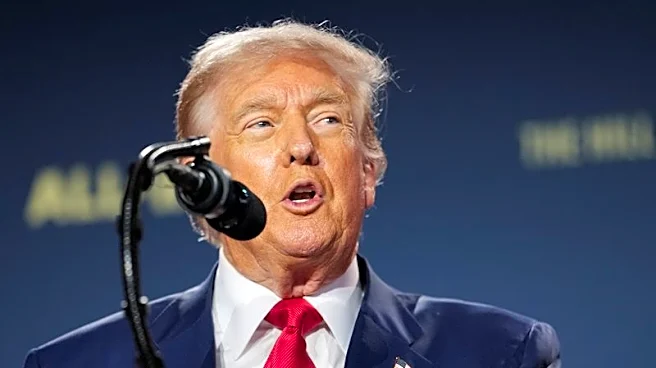
President Donald Trump has decided to halt the signing of an executive order that would have required federal agencies to review the nation's most advanced artificial intelligence models before their public release. The proposed order aimed to establish
a framework for AI labs to share their models with national security agencies and create a joint cybersecurity clearinghouse. This decision follows internal debates within the White House regarding the extent of government oversight on AI. Some advisors, including Kevin Hassett, suggested a regulatory approach similar to the FDA, while others, like Susie Wiles, opposed such intervention, advocating for innovation over bureaucracy. Former AI czar David Sacks played a significant role in opposing the order.
Why It's Important?
The decision to pause the executive order reflects a critical moment in the U.S. approach to AI regulation. The AI industry is a rapidly growing sector with significant implications for national security, economic growth, and technological leadership. Overregulation could stifle innovation and delay the deployment of beneficial technologies, potentially allowing other countries to surpass the U.S. in AI advancements. The debate highlights the tension between ensuring safety and security and fostering an environment conducive to technological progress. Stakeholders in the AI industry, including tech companies and national security agencies, are closely watching these developments, as they could shape the future landscape of AI governance in the U.S.
What's Next?
The decision to halt the executive order suggests that further discussions and negotiations within the White House and with industry stakeholders are likely. The administration may seek to develop a more balanced approach that addresses security concerns without imposing excessive regulatory burdens. This could involve consultations with AI experts, industry leaders, and policymakers to craft a framework that supports innovation while safeguarding national interests. The outcome of these discussions will be crucial in determining the U.S.'s competitive position in the global AI race.