







What's Happening?
Benevolence Farm in Alamance County, North Carolina, has officially opened a new community of seven tiny homes designed to provide transitional housing for formerly incarcerated women and gender-expansive individuals. This initiative aims to bridge the
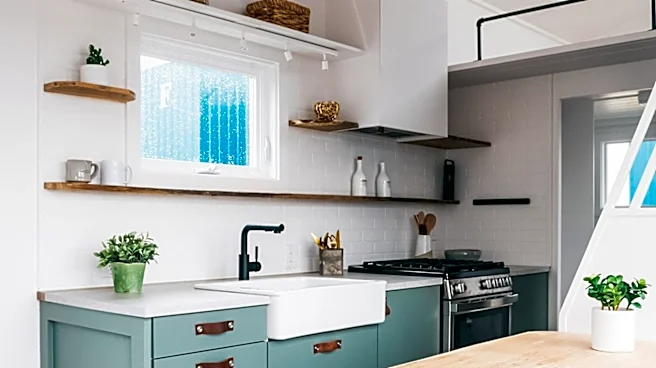
gap between communal transitional housing and permanent independent living. Each 400-square-foot home is fully equipped with a bedroom, bathroom, kitchen, living area, and laundry facilities. The project, which cost approximately $1.8 million, received significant funding, including $1.1 million from the North Carolina Housing Finance Agency. The design process involved input from formerly incarcerated women to ensure the homes meet their specific needs, focusing on creating a safe, independent, and supportive environment. This expansion doubles Benevolence Farm's housing capacity and addresses a critical need for stable housing for individuals reentering society after incarceration.
Why It's Important?
The opening of this tiny home community is crucial for addressing the growing crisis of homelessness among individuals released from North Carolina prisons. In fiscal year 2025, over 4,200 people, more than one in five, were released without stable housing, marking a 38% increase from the previous year. Lack of stable housing is a significant barrier to successful reentry, often leading to difficulties with parole compliance, accessing treatment, and securing employment, which can increase recidivism rates. This project provides a model for supportive housing that fosters independence while maintaining community support, which is particularly vital for vulnerable populations, including women on the sex offender registry who face extremely limited housing options. By offering a stable foundation, these homes can significantly improve the chances of successful reintegration and reduce the societal costs associated with re-incarceration and homelessness.
What's Next?
The first residents are expected to move into the tiny homes shortly, following final inspections. Benevolence Farm plans to continue supporting residents as they transition from shared farmhouse living to more independent living in the tiny homes, helping them develop essential life skills such as budgeting and home maintenance. The organization hopes this model can be replicated across North Carolina to address the widespread need for reentry housing. Other organizations, such as Arise Collective in Raleigh, are also expanding their housing initiatives for formerly incarcerated women, with plans to build affordable townhomes by late 2027 or early 2028. Continued community effort and diverse housing solutions, including shared housing and backyard housing, will be necessary to meet the demand for stable housing for hundreds of women returning from incarceration.
Beyond the Headlines
This initiative highlights the profound impact of housing on successful reentry and challenges conventional approaches to post-incarceration support. By involving formerly incarcerated individuals in the design process, Benevolence Farm has created spaces that are not only functional but also psychologically restorative, avoiding elements that might trigger past trauma from prison environments. The emphasis on individual space within a supportive community addresses the complex needs of those who have experienced long-term institutionalization, helping them rebuild autonomy and self-sufficiency. This project also underscores the broader societal benefit of investing in reentry programs, as stable housing reduces recidivism, enhances public safety, and decreases the financial burden on taxpayers by lowering incarceration rates and reliance on emergency social services. It represents a shift towards more humane and effective strategies for reintegration.