


What's Happening?
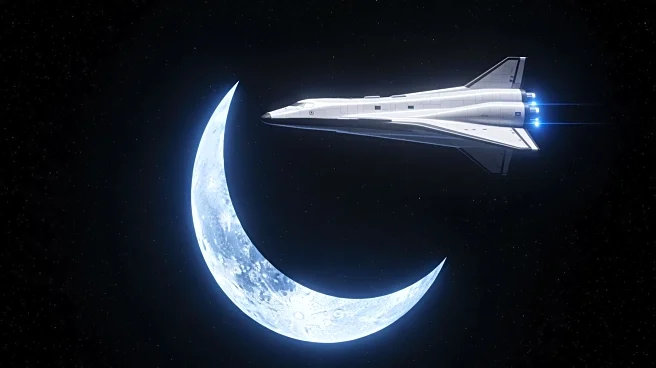
The crew of NASA's Artemis II mission has arrived at Kennedy Space Center in Florida in preparation for their upcoming lunar flyby. The mission, set to launch no earlier than April 1, 2026, will take the crew on a 10-day journey around the moon and back.
The crew includes NASA astronauts Reid Wiseman, Victor Glover, Christina Koch, and Canadian Space Agency astronaut Jeremy Hansen. As part of the mission preparations, the crew will review their launch day timeline, participate in medical checkouts, and spend time with family. A unique aspect of the mission is the inclusion of a zero gravity indicator, 'Rise,' designed by Lucas Ye from Mountain View, California, which was selected from over 2,600 submissions in a Moon Mascot contest.
Why It's Important?
The arrival of the Artemis II crew at Kennedy Space Center marks a critical step in NASA's Artemis program, which aims to establish a sustained human presence on the moon. The mission will test the Space Launch System rocket and Orion spacecraft's capabilities, ensuring they can safely transport astronauts to and from lunar space. The selection of a zero gravity indicator from a global contest highlights NASA's efforts to engage the public and inspire interest in space exploration. The mission's success will pave the way for future Artemis missions, including the eventual establishment of a lunar base.
What's Next?
As the launch date approaches, the Artemis II crew will continue their preparations, including reviewing mission activities and undergoing medical checkouts. NASA will conduct a 'wet dress rehearsal' to test the rocket's systems and countdown procedures. If successful, the mission will proceed as planned, with the crew embarking on their lunar flyby. The mission's outcome will inform the planning and execution of subsequent Artemis missions, including Artemis III, which aims to land astronauts on the moon's surface.