







What's Happening?
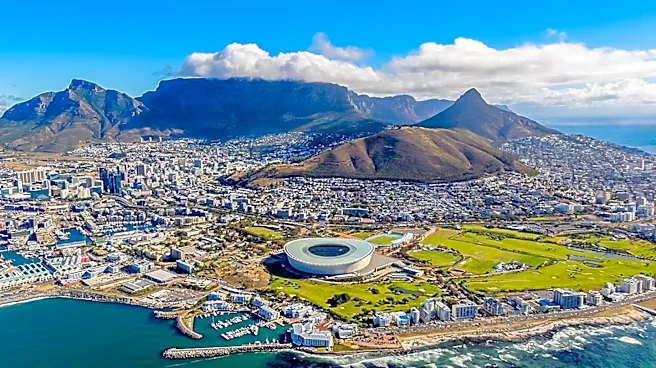
Cape Town, South Africa, is actively promoting its diverse range of tourist attractions, offering a blend of natural beauty, historical sites, and cultural experiences. Key landmarks include Table Mountain, providing panoramic views of the coastline,
and the V&A Waterfront, a hub for shopping, dining, and entertainment. The city also features the colorful Bo-Kaap neighborhood, known for its unique architecture and cultural heritage. Beyond urban attractions, Cape Town boasts beautiful beaches like Camps Bay and Clifton, and opportunities for wildlife encounters, such as observing African penguins at Boulders Beach. Historical sites like Robben Island, where Nelson Mandela was imprisoned, and the Kirstenbosch National Botanical Garden further enrich the visitor experience. The city is positioned as a destination catering to various traveler interests, from adventure seekers and families to couples looking for scenic views and fine dining.
Why It's Important?
The promotion of Cape Town's tourism is important for its local economy, supporting numerous businesses in hospitality, retail, and entertainment. Increased tourism can lead to job creation and stimulate economic growth within the region. For international travelers, particularly from the U.S., Cape Town offers a unique and accessible African experience, with many countries, including the U.S., not requiring a visa for short stays. This accessibility, combined with a diverse array of attractions, positions Cape Town as a competitive destination in the global tourism market. The emphasis on both natural wonders and cultural heritage also contributes to a more holistic understanding of South Africa, potentially fostering cultural exchange and appreciation among visitors.
What's Next?
Cape Town is expected to continue its efforts in attracting international tourists by highlighting its unique offerings. Travel agencies and tour operators are likely to further develop packages that combine popular attractions like Table Mountain, the V&A Waterfront, and the Garden Route with cultural and wildlife experiences. The city will likely focus on maintaining its infrastructure and services to accommodate a growing number of visitors. Recommendations suggest that visitors spend at least three to five days to adequately explore the key attractions, indicating a focus on encouraging longer stays. The ongoing promotion of Cape Town as a diverse and welcoming destination will be crucial for its sustained growth in the tourism sector.
Beyond the Headlines
The sustained appeal of Cape Town as a tourist destination also carries broader implications for conservation and cultural preservation. As tourism grows, there's an increased need to balance visitor numbers with the protection of natural sites like Table Mountain and wildlife habitats such as Boulders Beach. Similarly, the cultural integrity of areas like Bo-Kaap and historical sites like Robben Island must be carefully managed to ensure authentic experiences while educating visitors about their significance. The economic benefits of tourism can provide resources for these preservation efforts, but careful planning and sustainable practices are essential to prevent over-tourism and its potential negative impacts on the environment and local communities.